-
1C
-
Agda
-
Agile/Scrum
-
Alef
-
APL
-
Assembler
-
AWK
-
Basic
-
Beta Programming Language
-
Big Data/DataScience
-
C
-
C#
-
C++
-
Cobol
-
Crystal
-
CSS
-
D
-
Dart
-
DataBase (SQL)
-
Delphi
-
F#
-
Flutter
-
Fortran
-
GameDev
-
Git
-
Go (Golang)
-
GPT/AI/ИИ
-
Hacking and Security
-
Haskell
-
HTML
-
Java
-
JavaScript (JS)
-
Julia
-
Kotlin
-
Machine Learning (ML)
-
Natural language processing (NLP)
-
.NET (.NET Core)
-
Pascal
-
PHP
-
Python
-
R
-
Ruby
-
Rust
-
Scratch
-
Swift
-
UML
-
UX/UI
-
Visual Basic
-
Wolfram
-
XML
-
АСУ
-
Проектирование/System Design
-
Сети/Network
-
Статьи
-
Схемотехника/электронные схемы
-
1C
-
Agda
-
Agile/Scrum
-
Alef
-
APL
-
Assembler
-
AWK
-
Basic
-
Beta Programming Language
-
Big Data/DataScience
-
C
-
C#
-
C++
-
Cobol
-
Crystal
-
CSS
-
D
-
Dart
-
DataBase (SQL)
-
Delphi
-
F#
-
Flutter
-
Fortran
-
GameDev
-
Git
-
Go (Golang)
-
GPT/AI/ИИ
-
Hacking and Security
-
Haskell
-
HTML
-
Java
-
JavaScript (JS)
-
Julia
-
Kotlin
-
Machine Learning (ML)
-
Natural language processing (NLP)
-
.NET (.NET Core)
-
Pascal
-
PHP
-
Python
-
R
-
Ruby
-
Rust
-
Scratch
-
Swift
-
UML
-
UX/UI
-
Visual Basic
-
Wolfram
-
XML
-
АСУ
-
Проектирование/System Design
-
Сети/Network
-
Статьи
-
Схемотехника/электронные схемы
Меню
Agile Model-Based Systems Engineering Cookbook: Improve system development by applying proven recipes for effective agile systems engineering. 2 Ed
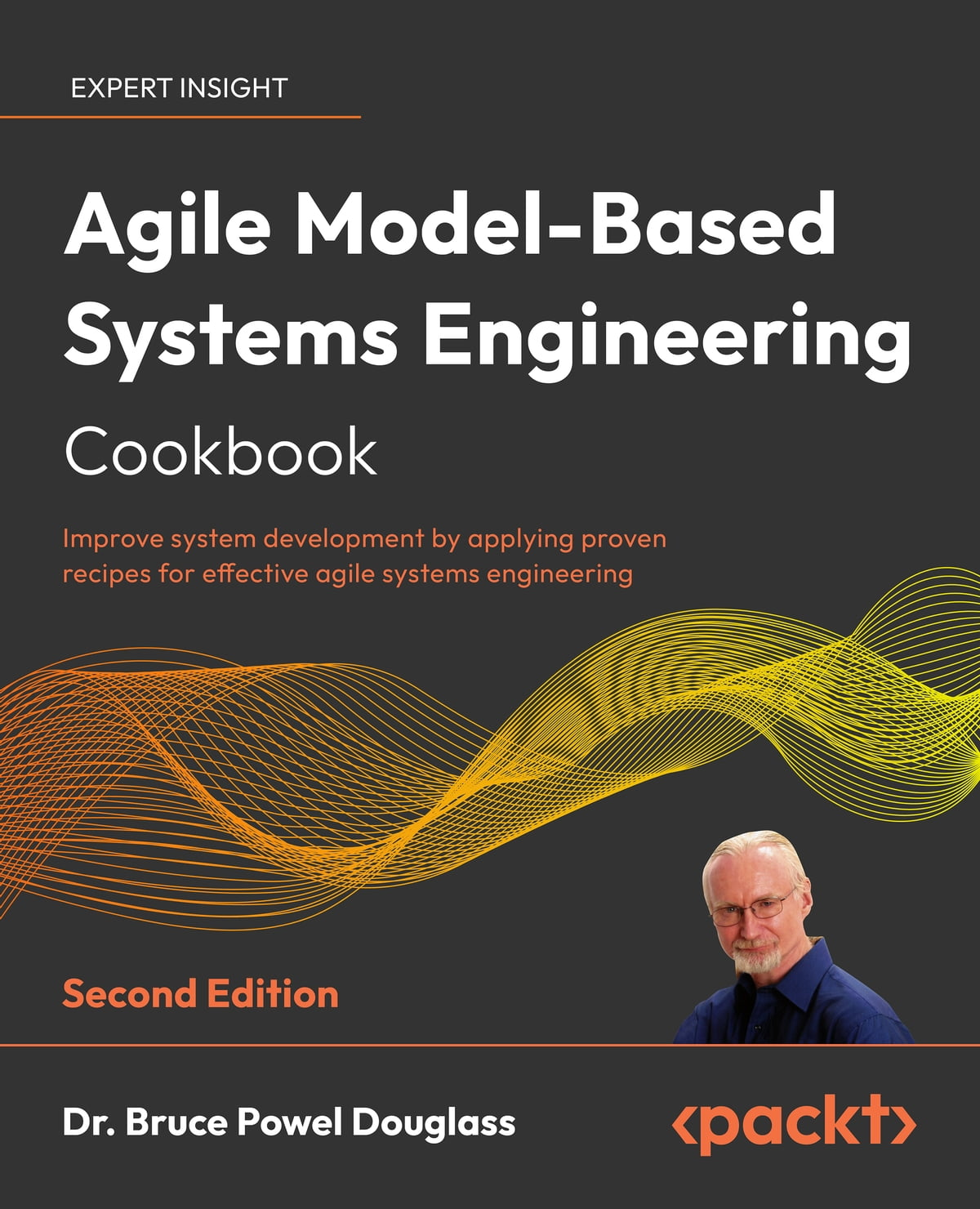
Автор: Douglass Bruce Powel
Дата выхода: 2022
Издательство: Packt Publishing Limited
Количество страниц: 740
Размер файла: 11,9 МБ
Тип файла: PDF
Добавил: codelibs
Проверить на вирусыCover Page....2
Table of Contents....3
Preface....4
Basics of Agile Systems Modeling....11
What’s agile all about?....13
Model-Based Systems Engineering (MBSE)....15
Managing your backlog....18
Measuring your success....33
Some considerations....44
Managing risk....46
Product roadmap....56
Release plan....65
Iteration plan....72
Estimating Effort....81
Work item prioritization....92
Iteration 0....105
Architecture 0....114
Organizing your models....135
Managing change....151
System Specification....171
Recipes in this chapter....171
Why aren’t textual requirements enough?....172
Definitions....173
Functional Analysis with Scenarios....175
Functional analysis with activities....197
Functional analysis with state machines....219
Functional Analysis with User Stories....235
Model-Based Safety Analysis....249
Hazard analysis....256
Model-Based Threat Analysis....268
Specifying Logical System Interfaces....289
Creating the Logical Data Schema....307
Developing System Architectures....334
Recipes in this chapter....334
Five critical views of architecture....335
Architectural trade studies....338
Creating subsystem interfaces from use case scenarios....414
Specializing a reference architecture....431
Handoff to Downstream Engineering....449
Recipes in this chapter....449
Activities for the handoff to downstream engineering....450
Demonstration of Meeting Needs: Verification and Validation....544
Recipes in this chapter....544
Verification and validation....546
Traceability....610
Effective Reviews and walkthroughs....625
Managing Model Work Items....639
Test Driven Modeling....646
Other Books You May Enjoy....675
Index....678
Appendix A: The Pegasus Bike Trainer....735
Agile MBSE can help organizations manage change while ensuring system correctness and meeting customers’ needs. But deployment challenges have changed since our first edition. The Agile Model-Based Systems Engineering Cookbook’s second edition focuses on workflows – or recipes – that will help MBSE practitioners and team leaders address practical situations that are part of deploying MBSE as part of an agile development process across the enterprise. In this 2nd edition, the Cameo MagicDraw Systems Modeler tool – the most popular tool for MBSE – is used in examples (models are downloadable by readers). Written by a world-renowned expert in MBSE, this book will take you through systems engineering workflows in the Cameo Systems Modeler SysML modeling tool and show you how they can be used with an agile and model-based approach. You’ll start with the key concepts of agile methods for systems engineering. Next, each recipe will take you through initiating a project, outlining stakeholder needs, defining and analyzing system requirements, specifying system architecture, performing model-based engineering trade studies, all the way to handling systems specifications off to downstream engineering. By the end of this MBSE book, you’ll learn how to implement systems engineering workflows and create systems engineering models.


