-
1C
-
Agda
-
Agile/Scrum
-
Alef
-
APL
-
Assembler
-
AWK
-
Basic
-
Beta Programming Language
-
Big Data/DataScience
-
C
-
C#
-
C++
-
Cobol
-
Crystal
-
CSS
-
D
-
Dart
-
DataBase (SQL)
-
Delphi
-
F#
-
Flutter
-
Fortran
-
GameDev
-
Git
-
Go (Golang)
-
GPT/AI/ИИ
-
Hacking and Security
-
Haskell
-
HTML
-
Java
-
JavaScript (JS)
-
Julia
-
Kotlin
-
Machine Learning (ML)
-
Natural language processing (NLP)
-
.NET (.NET Core)
-
Pascal
-
PHP
-
Python
-
R
-
Ruby
-
Rust
-
Scratch
-
Swift
-
UML
-
UX/UI
-
Visual Basic
-
Wolfram
-
XML
-
АСУ
-
Проектирование/System Design
-
Сети/Network
-
Статьи
-
Схемотехника/электронные схемы
-
1C
-
Agda
-
Agile/Scrum
-
Alef
-
APL
-
Assembler
-
AWK
-
Basic
-
Beta Programming Language
-
Big Data/DataScience
-
C
-
C#
-
C++
-
Cobol
-
Crystal
-
CSS
-
D
-
Dart
-
DataBase (SQL)
-
Delphi
-
F#
-
Flutter
-
Fortran
-
GameDev
-
Git
-
Go (Golang)
-
GPT/AI/ИИ
-
Hacking and Security
-
Haskell
-
HTML
-
Java
-
JavaScript (JS)
-
Julia
-
Kotlin
-
Machine Learning (ML)
-
Natural language processing (NLP)
-
.NET (.NET Core)
-
Pascal
-
PHP
-
Python
-
R
-
Ruby
-
Rust
-
Scratch
-
Swift
-
UML
-
UX/UI
-
Visual Basic
-
Wolfram
-
XML
-
АСУ
-
Проектирование/System Design
-
Сети/Network
-
Статьи
-
Схемотехника/электронные схемы
Меню
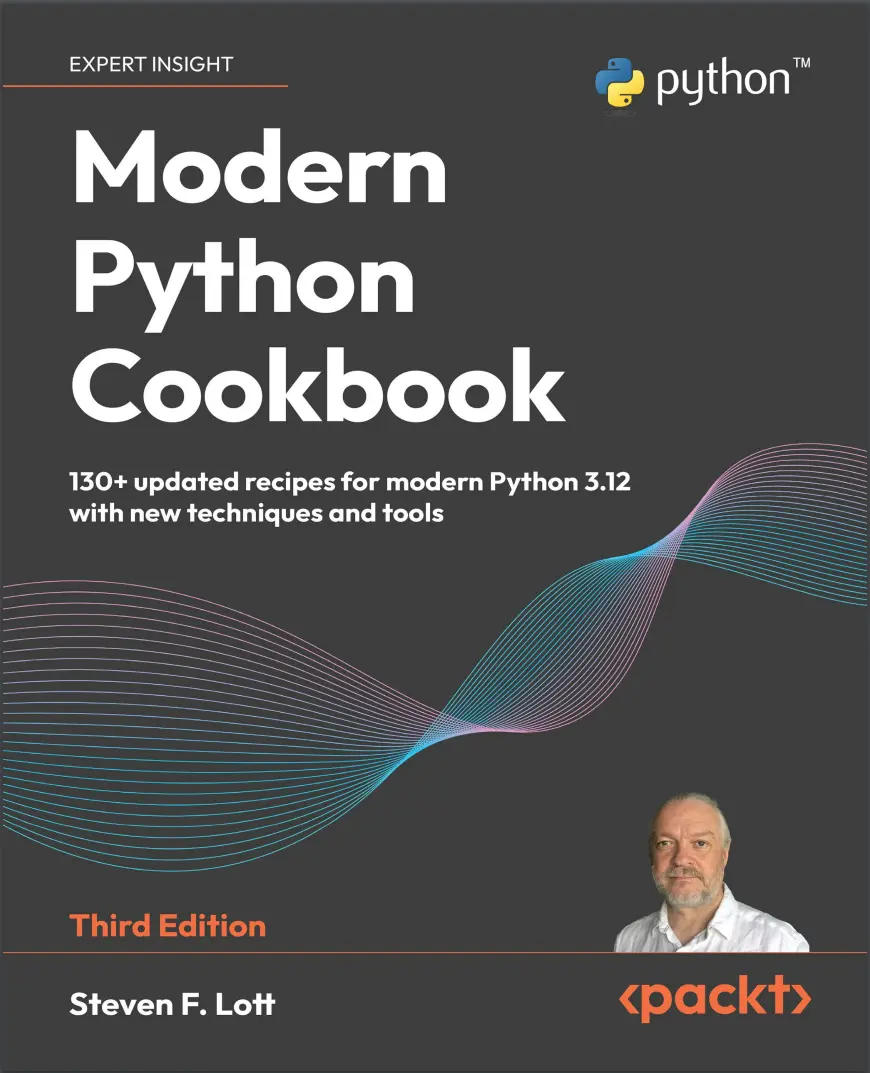
Modern Python Cookbook: 130+ updated recipes for modern Python 3.12 with new techniques and tools. 3 Ed
Автор: Lott Steven F.
Дата выхода: 2024
Издательство: Packt Publishing Limited
Количество страниц: 819
Размер файла: 2,6 МБ
Тип файла: PDF
Добавил: codelibs
Проверить на вирусы Дополнительные материалыCover....1
Copyright....3
Contributors....4
Table of Contents....8
Preface....16
Chapter 1: Numbers, Strings, and Tuples....24
Choosing between float, decimal, and fraction....25
Choosing between true division and floor division....32
String parsing with regular expressions....36
Building complicated strings with f-strings....41
Building complicated strings from lists of strings....46
Using the Unicode characters that aren't on our keyboards....49
Encoding strings – creating ASCII and UTF-8 bytes....52
Decoding bytes – how to get proper characters from some bytes....56
Using tuples of items....59
Using NamedTuples to simplify item access in tuples....63
Chapter 2: Statements and Syntax....68
Writing Python script and module files – syntax basics....70
Writing long lines of code....75
Including descriptions and documentation....80
Writing better docstrings with RST markup....85
Designing complex if...elif chains....90
Saving intermediate results with the := "walrus" operator....96
Avoiding a potential problem with break statements....100
Leveraging exception matching rules....104
Avoiding a potential problem with an except: clause....109
Concealing an exception root cause....111
Managing a context using the with statement....114
Chapter 3: Function Definitions....120
Function parameters and type hints....121
Designing functions with optional parameters....126
Using super flexible keyword parameters....132
Forcing keyword-only arguments with the * separator....137
Defining position-only parameters with the / separator....142
Picking an order for parameters based on partial functions....145
Writing clear documentation strings with RST markup....152
Designing recursive functions around Python's stack limits....157
Writing testable scripts with the script-library switch....162
Chapter 4: Built-In Data Structures Part 1: Lists and Sets....168
Choosing a data structure....169
Building lists – literals, appending, and comprehensions....174
Slicing and dicing a list....180
Shrinking lists – deleting, removing, and popping....186
Writing list-related type hints....192
Reversing a copy of a list....196
Building sets – literals, adding, comprehensions, and operators....200
Shrinking sets – remove(), pop(), and difference....207
Writing set-related type hints....211
Chapter 5: Built-In Data Structures Part 2: Dictionaries....218
Creating dictionaries – inserting and updating....219
Shrinking dictionaries – the pop() method and the del statement....225
Writing dictionary-related type hints....228
Understanding variables, references, and assignment....234
Making shallow and deep copies of objects....238
Avoiding mutable default values for function parameters....244
Chapter 6: User Inputs and Outputs....252
Using the features of the print() function....253
Using input() and getpass() for user input....258
Debugging with f"{value=}" strings....264
Using argparse to get command-line input....266
Using invoke to get command-line input....272
Using cmd to create command-line applications....276
Using the OS environment settings....280
Chapter 7: Basics of Classes and Objects....286
Using a class to encapsulate data and processing....288
Essential type hints for class definitions....292
Designing classes with lots of processing....297
Using typing.NamedTuple for immutable objects....303
Using dataclasses for mutable objects....306
Using frozen dataclasses for immutable objects....312
Optimizing small objects with __slots__....315
Using more sophisticated collections....320
Extending a built-in collection – a list that does statistics....326
Using properties for lazy attributes....330
Creating contexts and context managers....336
Managing multiple contexts with multiple resources....342
Chapter 8: More Advanced Class Design....350
Choosing between inheritance and composition – the "is-a" question....351
Separating concerns via multiple inheritance....358
Leveraging Python's duck typing....365
Managing global and singleton objects....370
Using more complex structures – maps of lists....376
Creating a class that has orderable objects....381
Deleting from a list of complicated objects....387
Chapter 9: Functional Programming Features....394
Writing generator functions with the yield statement....396
Applying transformations to a collection....404
Using stacked generator expressions....409
Picking a subset – three ways to filter....417
Summarizing a collection – how to reduce....422
Combining the map and reduce transformations....428
Implementing ``there exists'' processing....435
Creating a partial function....440
Writing recursive generator functions with the yield from statement....446
Chapter 10: Working with Type Matching and Annotations....454
Designing with type hints....455
Using the built-in type matching functions....463
Using the match statement....467
Handling type conversions....471
Implementing more strict type checks with Pydantic....478
Including run-time valid value checks....485
Chapter 11: Input/Output, Physical Format, and Logical Layout....494
Using pathlib to work with filenames....497
Replacing a file while preserving the previous version....505
Reading delimited files with the CSV module....511
Using dataclasses to simplify working with CSV files....518
Reading complex formats using regular expressions....523
Reading JSON and YAML documents....531
Reading XML documents....539
Reading HTML documents....546
Chapter 12: Graphics and Visualization with Jupyter Lab....556
Starting a Notebook and creating cells with Python code....558
Ingesting data into a notebook....563
Using pyplot to create a scatter plot....569
Using axes directly to create a scatter plot....575
Adding details to markdown cells....581
Including Unit Test Cases in a Notebook....585
Chapter 13: Application Integration: Configuration....590
Finding configuration files....592
Using TOML for configuration files....598
Using Python for configuration files....603
Using a class as a namespace for configuration....608
Designing scripts for composition....614
Using logging for control and audit output....619
Chapter 14: Application Integration: Combination....628
Combining two applications into one....629
Combining many applications using the Command design pattern....637
Managing arguments and configuration in composite applications....643
Wrapping and combining CLI applications....650
Wrapping a program and checking the output....655
Chapter 15: Testing....664
Using docstrings for testing....666
Testing functions that raise exceptions....674
Handling common doctest issues....677
Unit testing with the unittest module....684
Combining unittest and doctest tests....690
Unit testing with the pytest module....695
Combining pytest and doctest tests....700
Testing things that involve dates or times....704
Testing things that involve randomness....709
Mocking external resources....716
Chapter 16: Dependencies and Virtual Environments....726
Creating environments using the built-in venv....729
Installing packages with a requirements.txt file....734
Creating a pyproject.toml file....739
Using pip-tools to manage the requirements.txt file....746
Using Anaconda and the conda tool....750
Using the poetry tool....755
Coping with changes in dependencies....759
Chapter 17: Documentation and Style....766
The bare minimum: a README.rst file....767
Installing Sphinx and creating documentation....772
Using Sphinx autodoc to create the API reference....777
Identifying other CI/CD tools in pyproject.toml....783
Using tox to run comprehensive quality checks....787
Other Books You May Enjoy....796
Packt Page....794
Index....800
Blank Page....819
Python is the go-to language for developers, engineers, data scientists, and hobbyists worldwide. Known for its versatility, Python can efficiently power applications, offering remarkable speed, safety, and scalability. This book distills Python into a collection of straightforward recipes, providing insights into specific language features within various contexts, making it an indispensable resource for mastering Python and using it to handle real-world use cases.
The third edition of Modern Python Cookbook provides an in-depth look into Python 3.12, offering more than 140 new and updated recipes that cater to both beginners and experienced developers. This edition introduces new chapters on documentation and style, data visualization with Matplotlib and Pyplot, and advanced dependency management techniques using tools like Poetry and Anaconda. With practical examples and detailed explanations, this cookbook helps developers solve real-world problems, optimize their code, and get up to date with the latest Python features.
What you will learn
- Master core Python data structures, algorithms, and design patterns
- Implement object-oriented designs and functional programming features
- Use type matching and annotations to make more expressive programs
- Create useful data visualizations with Matplotlib and Pyplot
- Manage project dependencies and virtual environments effectively
- Follow best practices for code style and testing
- Create clear and trustworthy documentation for your projects
Who this book is for
This Python book is for web developers, programmers, enterprise programmers, engineers, and big data scientists. If you are a beginner, this book offers helpful details and design patterns for learning Python. If you are experienced, it will expand your knowledge base. Fundamental knowledge of Python programming and basic programming principles will be helpful


