-
1C
-
Agda
-
Agile/Scrum
-
Alef
-
APL
-
Assembler
-
AWK
-
Basic
-
Beta Programming Language
-
Big Data/DataScience
-
C
-
C#
-
C++
-
Cobol
-
Crystal
-
CSS
-
D
-
Dart
-
DataBase (SQL)
-
Delphi
-
F#
-
Flutter
-
Fortran
-
GameDev
-
Git
-
Go (Golang)
-
GPT/AI/ИИ
-
Hacking and Security
-
Haskell
-
HTML
-
Java
-
JavaScript (JS)
-
Julia
-
Kotlin
-
Machine Learning (ML)
-
Natural language processing (NLP)
-
.NET (.NET Core)
-
Pascal
-
PHP
-
Python
-
R
-
Ruby
-
Rust
-
Scratch
-
Swift
-
UML
-
UX/UI
-
Visual Basic
-
Wolfram
-
XML
-
АСУ
-
Проектирование/System Design
-
Сети/Network
-
Статьи
-
Схемотехника/электронные схемы
-
1C
-
Agda
-
Agile/Scrum
-
Alef
-
APL
-
Assembler
-
AWK
-
Basic
-
Beta Programming Language
-
Big Data/DataScience
-
C
-
C#
-
C++
-
Cobol
-
Crystal
-
CSS
-
D
-
Dart
-
DataBase (SQL)
-
Delphi
-
F#
-
Flutter
-
Fortran
-
GameDev
-
Git
-
Go (Golang)
-
GPT/AI/ИИ
-
Hacking and Security
-
Haskell
-
HTML
-
Java
-
JavaScript (JS)
-
Julia
-
Kotlin
-
Machine Learning (ML)
-
Natural language processing (NLP)
-
.NET (.NET Core)
-
Pascal
-
PHP
-
Python
-
R
-
Ruby
-
Rust
-
Scratch
-
Swift
-
UML
-
UX/UI
-
Visual Basic
-
Wolfram
-
XML
-
АСУ
-
Проектирование/System Design
-
Сети/Network
-
Статьи
-
Схемотехника/электронные схемы
Меню
Eloquent JavaScript. 4 Ed
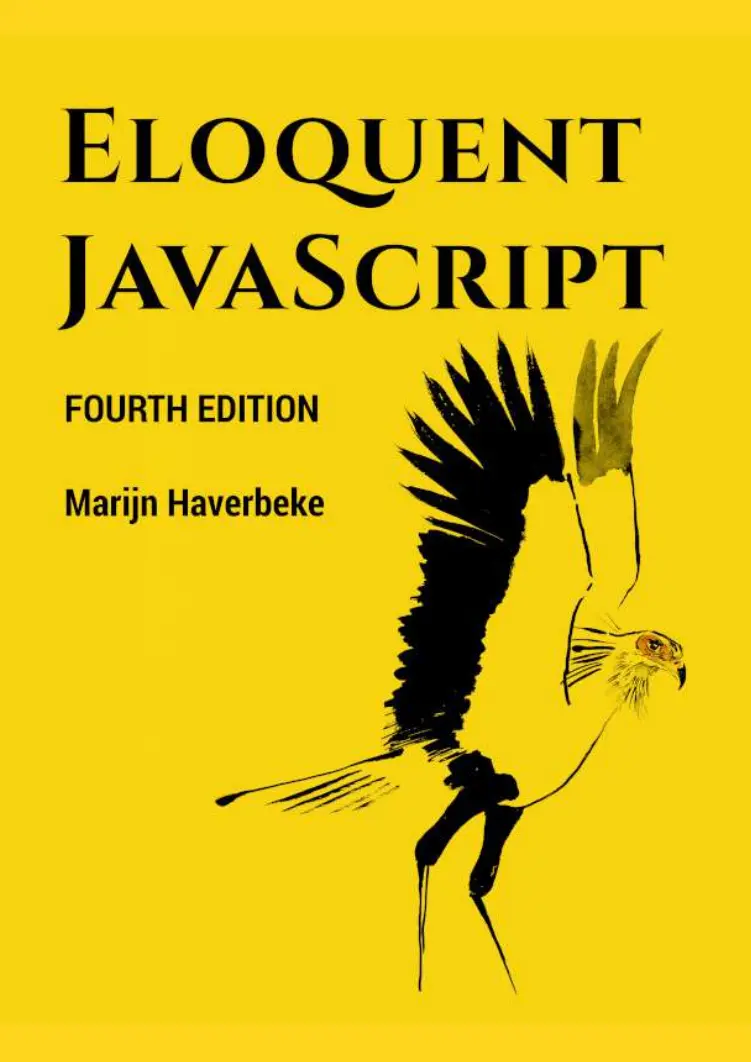
Автор: Haverbeke Marijn
Дата выхода: 2024
Издательство: No Starch Press, Inc.
Количество страниц: 434
Размер файла: 1,8 МБ
Тип файла: PDF
Добавил: codelibs
Проверить на вирусыModeling and Simulation Book - Table of Contents
Front Matter
- Acknowledgments
- Introduction
- Who Is This Book For?
- How Much Math and Science Do I Need?
- How Much Programming Do I Need?
- Book Overview
- Teaching Modeling
- Getting Started
- Installing Python
- Running Jupyter
- Suggestions and Corrections
PART I: DISCRETE SYSTEMS
Chapter 1: Introduction to Modeling
- The Modeling Framework
- Testing the Falling Penny Myth
- Computation in Python
- False Precision
- Computation with Units
- Summary
- Exercises
Chapter 2: Modeling a Bike Share System
- Our Bike Share Model
- Defining Functions
- Print Statements
- if Statements
- Parameters
- for Loops
- TimeSeries
- Plotting
- Summary
- Exercises
- Under the Hood
Chapter 3: Iterative Modeling
- Iterating on Our Bike Share Model
- Using More Than One State Object
- Documentation
- Dealing with Negative Bikes
- Comparison Operators
- Introducing Metrics
- Summary
- Exercises
Chapter 4: Parameters and Metrics
- Functions That Return Values
- Loops and Arrays
- Sweeping Parameters
- Incremental Development
- Summary
- Exercises
- Challenge Exercises
- Under the Hood
Chapter 5: Building a Population Model
- Exploring the Data
- Absolute and Relative Errors
- Modeling Population Growth
- Simulating Population Growth
- Summary
- Exercise
Chapter 6: Iterating the Population Model
- System Objects
- A Proportional Growth Model
- Factoring Out the Update Function
- Combining Birth and Death
- Summary
- Exercise
- Under the Hood
Chapter 7: Limits to Growth
- Quadratic Growth
- Net Growth
- Finding Equilibrium
- Dysfunctions
- Summary
- Exercises
Chapter 8: Projecting into the Future
- Generating Projections
- Comparing Projections
- Summary
- Exercise
Chapter 9: Analysis and Symbolic Computation
- Difference Equations
- Differential Equations
- Analysis and Simulation
- Analysis with WolframAlpha
- Analysis with SymPy
- Differential Equations in SymPy
- Solving the Quadratic Growth Model
- Summary
- Exercises
Chapter 10: Case Studies Part I
- Historical World Population
- One Queue or Two?
- Predicting Salmon Populations
- Tree Growth
PART II: FIRST-ORDER SYSTEMS
Chapter 11: Epidemiology and SIR Models
- The Freshman Plague
- The Kermack-McKendrick Model
- The KM Equations
- Implementing the KM Model
- The Update Function
- Running the Simulation
- Collecting the Results
- Now with a TimeFrame
- Summary
- Exercise
Chapter 12: Quantifying Interventions
- The Effects of Immunization
- Choosing Metrics
- Sweeping Immunization
- Summary
- Exercise
Chapter 13: Sweeping Parameters
- Sweeping Beta
- Sweeping Gamma
- Using a SweepFrame
- Summary
- Exercise
Chapter 14: Nondimensionalization
- Beta and Gamma
- Exploring the Results
- Contact Number
- Comparing Analysis and Simulation
- Estimating the Contact Number
- Summary
- Exercises
- Under the Hood
Chapter 15: Thermal Systems
- The Coffee Cooling Problem
- Temperature and Heat
- Heat Transfer
- Newton's Law of Cooling
- Implementing Newtonian Cooling
- Finding Roots
- Estimating r
- Summary
- Exercises
Chapter 16: Solving the Coffee Problem
- Mixing Liquids
- Mix First or Last?
- Optimal Timing
- The Analytic Solution
- Summary
- Exercises
Chapter 17: Modeling Blood Sugar
- The Minimal Model
- The Glucose Minimal Model
- Getting the Data
- Interpolation
- Summary
- Exercises
Chapter 18: Implementing the Minimal Model
- Implementing the Model
- The Update Function
- Running the Simulation
- Solving Differential Equations
- Summary
- Exercise
Chapter 19: Case Studies Part II
- Revisiting the Minimal Model
- The Insulin Minimal Model
- Low-Pass Filter
- Thermal Behavior of a Wall
- HIV
PART III: SECOND-ORDER SYSTEMS
Chapter 20: The Falling Penny Revisited
- Newton's Second Law of Motion
- Dropping Pennies
- Event Functions
- Summary
- Exercise
Chapter 21: Drag
- Calculating Drag Force
- The Params Object
- Simulating the Penny Drop
- Summary
- Exercises
Chapter 22: Two-Dimensional Motion
- Assumptions and Decisions
- Vectors
- Simulating Baseball Flight
- Drag Force
- Adding an Event Function
- Visualizing Trajectories
- Animating the Baseball
- Summary
- Exercises
Chapter 23: Optimization
- The Manny Ramirez Problem
- Finding the Range
- Summary
- Exercise
- Under the Hood
Chapter 24: Rotation
- The Physics of Toilet Paper
- Setting Parameters
- Simulating the System
- Plotting the Results
- The Analytic Solution
- Summary
- Exercise
Chapter 25: Torque
- Angular Acceleration
- Moment of Inertia
- Teapots and Turntables
- Two-Phase Simulation
- Phase 1
- Phase 2
- Combining the Results
- Estimating Friction
- Animating the Turntable
- Summary
- Exercise
Chapter 26: Case Studies Part III
- Bungee Jumping
- Bungee Dunk Revisited
- Orbiting the Sun
- Spider-Man
- Kittens
- Simulating a Yo-Yo
- Congratulations
Back Matter
Appendix: Under the Hood
- How run_solve_ivp Works
- How root_scalar Works
- How maximize_scalar Works
Index
JavaScript, the programming language that allows us to add programs to web pages, lies at the heart of almost every modern web application, from social media sites to browser-based games. Just about every device can run it, making it a great choice for writing universally useful code.
The fourth edition of this classic textbook takes you on a journey through the language of the web, starting from its basic elements and building up to engaging, complete programs. The author’s personal experiences from years of maintaining popular open source projects enliven the text with practical insights and examples.
This edition of Eloquent JavaScript updates the book to describe the 2024 version of JavaScript, and shifts the attention given to some topics to better reflect current development practices.
The text takes a practical approach to teaching, rooting theory in plenty of motivating examples. The first half of the book describes the fundamentals of the language, whereas the second half shows how to apply it in two programming environments: the web browser and Node.js. Five project chapters show how to build bigger programs, working through these projects in a piecemeal, conversational way. They include a pathfinding robot, a small programming language, a platform game, a pixel drawing program, and a simple dynamic website.
Exercises provided at the end of most chapters will challenge you to creatively apply the concepts and techniques introduced. The book’s companion website provides an interactive environment for working on these exercises and playing with the example programs.
Whether you’re looking to learn JavaScript or to deepen your programming skills, you’ll find this book full of stimulating material.
Updated to ECMAScript 2024


