-
1C
-
Agda
-
Agile/Scrum
-
Alef
-
APL
-
Assembler
-
AWK
-
Basic
-
Beta Programming Language
-
Big Data/DataScience
-
C
-
C#
-
C++
-
Cobol
-
Crystal
-
CSS
-
D
-
Dart
-
DataBase (SQL)
-
Delphi
-
F#
-
Flutter
-
Fortran
-
GameDev
-
Git
-
Go (Golang)
-
GPT/AI/ИИ
-
Hacking and Security
-
Haskell
-
HTML
-
Java
-
JavaScript (JS)
-
Julia
-
Kotlin
-
Machine Learning (ML)
-
Natural language processing (NLP)
-
.NET (.NET Core)
-
Pascal
-
PHP
-
Python
-
R
-
Ruby
-
Rust
-
Scratch
-
Swift
-
UML
-
UX/UI
-
Visual Basic
-
Wolfram
-
XML
-
АСУ
-
Проектирование/System Design
-
Сети/Network
-
Статьи
-
Схемотехника/электронные схемы
-
1C
-
Agda
-
Agile/Scrum
-
Alef
-
APL
-
Assembler
-
AWK
-
Basic
-
Beta Programming Language
-
Big Data/DataScience
-
C
-
C#
-
C++
-
Cobol
-
Crystal
-
CSS
-
D
-
Dart
-
DataBase (SQL)
-
Delphi
-
F#
-
Flutter
-
Fortran
-
GameDev
-
Git
-
Go (Golang)
-
GPT/AI/ИИ
-
Hacking and Security
-
Haskell
-
HTML
-
Java
-
JavaScript (JS)
-
Julia
-
Kotlin
-
Machine Learning (ML)
-
Natural language processing (NLP)
-
.NET (.NET Core)
-
Pascal
-
PHP
-
Python
-
R
-
Ruby
-
Rust
-
Scratch
-
Swift
-
UML
-
UX/UI
-
Visual Basic
-
Wolfram
-
XML
-
АСУ
-
Проектирование/System Design
-
Сети/Network
-
Статьи
-
Схемотехника/электронные схемы
Меню
C++ Programming Cookbook. Proven solutions using C++ 20 across functions, file I/O, streams, memory management, STL, concurrency, type manipulation and error debugging
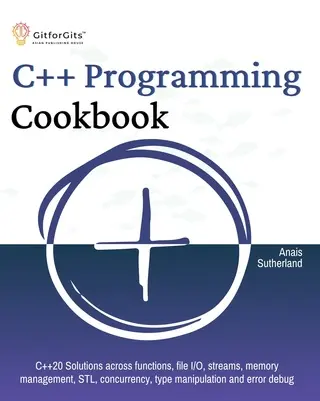
Автор: Sutherland Anais
Дата выхода: 2024
Издательство: GitforGits | Asian Publishing House
Количество страниц: 445
Размер файла: 1,8 МБ
Тип файла: PDF
Добавил: codelibs
Проверить на вирусыIntroduction to AWS Security Concepts and the Shared Responsibility Model
Infrastructure Security: Keeping your VPC secure
Identity and Access Management - Securing Users, Roles and Policies
Data Protection - Encryption, Key Management, and Data Storage Best Practices
Introduction to AWS Security Services
Designing Secure Microservices Architectures in AWS
Implementing Security for Serverless Deployments
Secure Design Patterns for Multi-Tenancy in Shared Environments
Automate Everything to Build Immutable and Ephemeral Resources
Advanced Logging, Auditing and Monitoring with AWS
Security Compliance with AWS Config, AWS Security Hub, and Automated Remediation
DevSecOps - Integrating Security into CI/CD Pipelines
Keeping Up with Evolving AWS Security Best Practices and Threat Landscape
Closing Note
"C++ Programming Cookbook" stands out as a clear, concise, and powerful technical resource for programmers who want to master C++'s intricacies. C++ programmers face a wide variety of problems, and this carefully written book is a treasure trove of solutions and methods to those software development challenges.
Each chapter is organized to help you get a good grasp of the language and everything it can do, from the basics of C++20 to more complex topics like sophisticated type manipulation and performance optimization. Through a series of carefully curated recipes, readers are invited on a journey of learning and competency. Starting with the fundamentals of creating a development environment and comprehending C++ syntax, the book progresses to cover more advanced subjects like concurrency, memory management, file I/O operations, object-oriented design concepts, functional programming, and more. This book focuses on the latest C++ features and aims to get programmers to use idiomatic C++ patterns and modern best practices.
"C++ Programming Cookbook" goes beyond being a mere collection of recipes; it serves as a manifesto for progressive software development practices and problem-solving. Readers are empowered to adapt and apply their learnings to new, unexplored situations because each recipe not only solves specific problems but also exposes fundamental ideas and methodologies. Writing code that is clean, efficient, and easy to maintain is a priority throughout the book, which aims to help readers develop a skill set that is applicable to more general programming problems.
Key Learnings
Make use of C++20 features to write more expressive, efficient, and modern C++ code effortlessly.
Utilize template metaprogramming for compile-time calculations, enhancing code performance.
Implement smart pointers for robust memory management without the usual complexity.
Put object-oriented programming principles into use to design scalable and maintainable C++ applications.
Explore advanced type manipulation techniques, ensuring type-safe and flexible code across applications.
Harness concurrency and multithreading to build high-performance, responsive C++ software solutions.
Optimize file I/O operations for seamless data handling in text and binary formats.
Implement custom stream buffers for tailored data processing, boosting I/O efficiency.
Navigate stream locales and facets for internationalizing your applications, reaching a global audience.
Uncover efficient error and exception handling strategies to build reliable and error-free C++ program.


