-
1C
-
Agda
-
Agile/Scrum
-
Alef
-
APL
-
Assembler
-
AWK
-
Basic
-
Beta Programming Language
-
Big Data/DataScience
-
C
-
C#
-
C++
-
Cobol
-
Crystal
-
CSS
-
D
-
Dart
-
DataBase (SQL)
-
Delphi
-
F#
-
Flutter
-
Fortran
-
GameDev
-
Git
-
Go (Golang)
-
GPT/AI/ИИ
-
Hacking and Security
-
Haskell
-
HTML
-
Java
-
JavaScript (JS)
-
Julia
-
Kotlin
-
Machine Learning (ML)
-
Natural language processing (NLP)
-
.NET (.NET Core)
-
Pascal
-
PHP
-
Python
-
R
-
Ruby
-
Rust
-
Scratch
-
Swift
-
UML
-
UX/UI
-
Visual Basic
-
Wolfram
-
XML
-
АСУ
-
Проектирование/System Design
-
Сети/Network
-
Статьи
-
Схемотехника/электронные схемы
-
1C
-
Agda
-
Agile/Scrum
-
Alef
-
APL
-
Assembler
-
AWK
-
Basic
-
Beta Programming Language
-
Big Data/DataScience
-
C
-
C#
-
C++
-
Cobol
-
Crystal
-
CSS
-
D
-
Dart
-
DataBase (SQL)
-
Delphi
-
F#
-
Flutter
-
Fortran
-
GameDev
-
Git
-
Go (Golang)
-
GPT/AI/ИИ
-
Hacking and Security
-
Haskell
-
HTML
-
Java
-
JavaScript (JS)
-
Julia
-
Kotlin
-
Machine Learning (ML)
-
Natural language processing (NLP)
-
.NET (.NET Core)
-
Pascal
-
PHP
-
Python
-
R
-
Ruby
-
Rust
-
Scratch
-
Swift
-
UML
-
UX/UI
-
Visual Basic
-
Wolfram
-
XML
-
АСУ
-
Проектирование/System Design
-
Сети/Network
-
Статьи
-
Схемотехника/электронные схемы
Меню
The AI Product Manager's Handbook: Develop a product that takes advantage of machine learning to solve AI problems
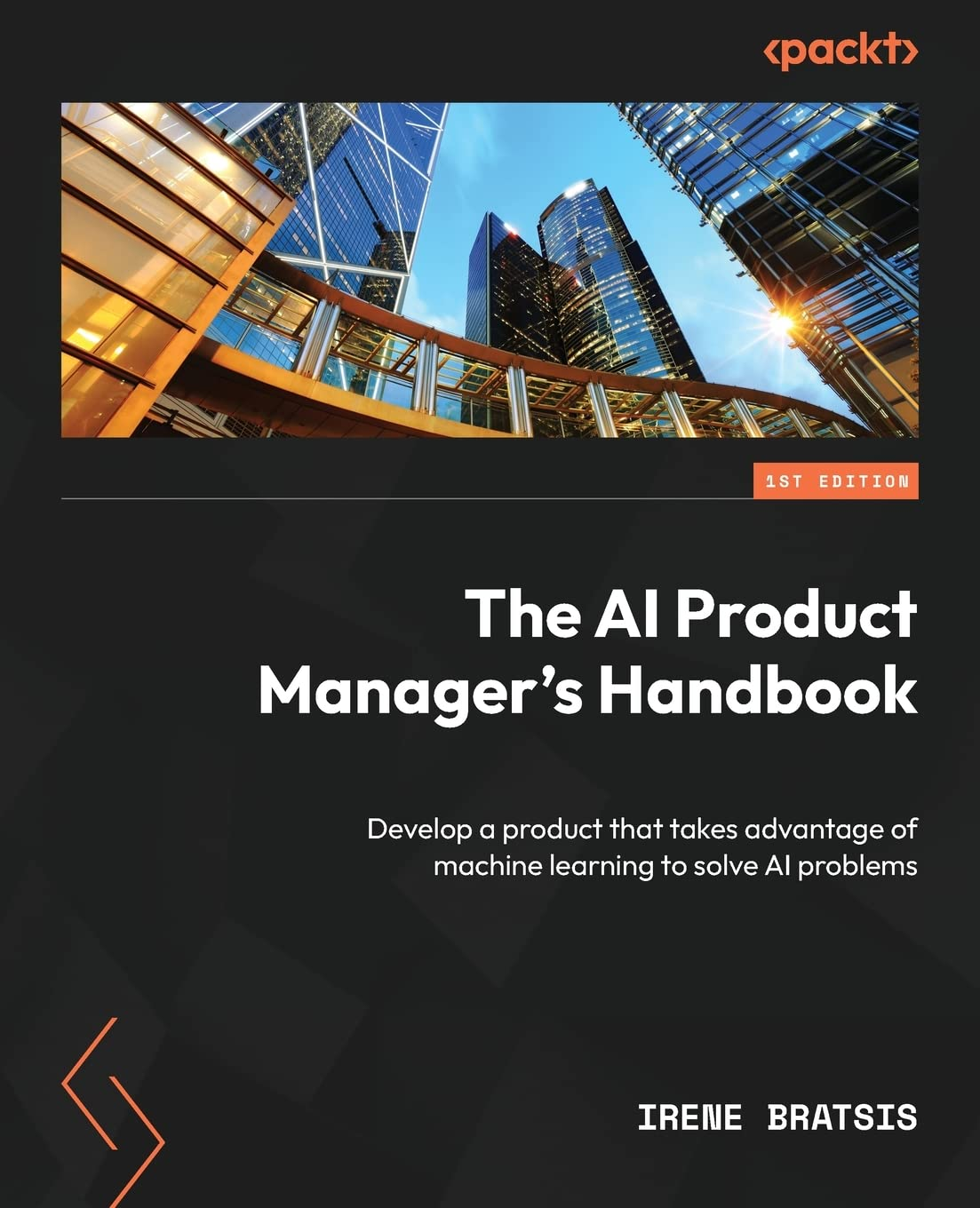
Автор: Bratsis Irene
Дата выхода: 2023
Издательство: Packt Publishing Limited
Количество страниц: 339
Размер файла: 1,6 МБ
Тип файла: PDF
Добавил: codelibs
Проверить на вирусыCover Page....2
Table of Contents....3
Preface....5
Part 1 – Lay of the Land – Terms, Infrastructure, Types of AI, and Products Done Well....11
Chapter 1: Understanding the Infrastructure and Tools for Building AI Products....12
Definitions – what is and is not AI....13
ML versus DL – understanding the difference....16
Learning types in ML....19
The order – what is the optimal flow and where does every part of the process live?....24
Managing projects – IaaS....31
Deployment strategies – what do we do with these outputs?....32
Succeeding in AI – how well-managed AI companies do infrastructure right....34
The promise of AI – where is AI taking us?....36
Summary....38
Additional resources....39
References....40
Chapter 2: Model Development and Maintenance for AI Products....42
Understanding the stages of NPD....42
Model types – from linear regression to neural networks....47
Training – when is a model ready for market?....49
Deployment – what happens after the workstation?....54
Testing and troubleshooting....57
Refreshing – the ethics of how often we update our models....59
Summary....63
Additional resources....64
References....65
Chapter 3: Machine Learning and Deep Learning Deep Dive....67
The old – exploring ML....68
The new – exploring DL....69
Emerging technologies – ancillary and related tech....84
Explainability – optimizing for ethics, caveats, and responsibility....85
Accuracy – optimizing for success....87
Summary....88
References....89
Chapter 4: Commercializing AI Products....92
The professionals – examples of B2B products done right....93
The artists – examples of B2C products done right....95
The pioneers – examples of blue ocean products....98
The rebels – examples of red ocean products....100
The GOAT – examples of differentiated disruptive and dominant strategy products....102
Summary....107
References....107
Chapter 5: AI Transformation and Its Impact on Product Management....109
Money and value – how AI could revolutionize our economic systems....111
Goods and services – growth in commercial MVPs....114
Government and autonomy – how AI will shape our borders and freedom....117
Sickness and health – the benefits of AI and nanotech across healthcare....121
Basic needs – AI for Good....123
Summary....125
Additional resources....125
References....126
Part 2 – Building an AI-Native Product....130
Chapter 6: Understanding the AI-Native Product....131
Stages of AI product development....132
AI/ML product dream team....137
Investing in your tech stack....143
Productizing AI-powered outputs – how AI product management is different....145
AI customization....147
Selling AI – product management as a higher octave of sales....149
Summary....151
References....151
Chapter 7: Productizing the ML Service....153
Understanding the differences between AI and traditional software products....153
B2B versus B2C – productizing business models....164
Consistency and AIOps/MLOps – reliance and trust....169
Performance evaluation – testing, retraining, and hyperparameter tuning....170
Feedback loop – relationship building....172
Summary....173
References....174
Chapter 8: Customization for Verticals, Customers, and Peer Groups....175
Domains – orienting AI toward specific areas....176
Verticals – examination into four areas (FinTech, healthcare, consumer goods, and cybersecurity)....184
Anomaly detection and user and entity behavior analytics....190
Value metrics – evaluating performance across verticals and peer groups....191
Thought leadership – learning from peer groups....195
Summary....196
References....196
Chapter 9: Macro and Micro AI for Your Product....198
Macro AI – Foundations and umbrellas....199
ML....201
Robotics....206
Expert systems....208
Fuzzy logic/fuzzy matching....208
Micro AI – Feature level....209
ML (traditional/DL/computer vision/NLP)....210
Successes – Examples that inspire....214
Challenges – Common pitfalls....217
Summary....221
References....222
Chapter 10: Benchmarking Performance, Growth Hacking, and Cost....223
Value metrics – a guide to north star metrics, KPIs and OKRs....224
Hacking – product-led growth....234
The tech stack – early signals....237
Managing costs and pricing – AI is expensive....245
Summary....246
References....247
Part 3 – Integrating AI into Existing Non-AI Products....249
Chapter 11: The Rising Tide of AI....250
Evolve or die – when change is the only constant....251
The fourth industrial revolution – hospitals used to use candles....254
Fear is not the answer – there is more to gain than lose (or spend)....261
Summary....266
Chapter 12: Trends and Insights across Industry....267
Highest growth areas – Forrester, Gartner, and McKinsey research....268
Trends in AI adoption – let the data speak for itself....275
Low-hanging fruit – quickest wins for AI enablement....281
Summary....283
References....284
Chapter 13: Evolving Products into AI Products....286
Venn diagram – what’s possible and what’s probable....287
Data is king – the bloodstream of the company....293
Competition – love your enemies....299
Product strategy – building a blueprint that works for everyone....301
Red flags and green flags – what to look for and watch out for....308
Summary....311
Additional resources....312
Index....314
Why subscribe?....335
Other Books You May Enjoy....336
Packt is searching for authors like you....337
Share Your Thoughts....337
Download a free PDF copy of this book....338
Product managers working with artificial intelligence will be able to put their knowledge to work with this practical guide to applied AI. This book covers everything you need to know to drive product development and growth in the AI industry. From understanding AI and machine learning to developing and launching AI products, it provides the strategies, techniques, and tools you need to succeed.
The first part of the book focuses on establishing a foundation of the concepts most relevant to maintaining AI pipelines. The next part focuses on building an AI-native product, and the final part guides you in integrating AI into existing products.
You'll learn about the types of AI, how to integrate AI into a product or business, and the infrastructure to support the exhaustive and ambitious endeavor of creating AI products or integrating AI into existing products. You'll gain practical knowledge of managing AI product development processes, evaluating and optimizing AI models, and navigating complex ethical and legal considerations associated with AI products. With the help of real-world examples and case studies, you'll stay ahead of the curve in the rapidly evolving field of AI and ML.
By the end of this book, you'll have understood how to navigate the world of AI from a product perspective.
What you will learn
- Build AI products for the future using minimal resources
- Identify opportunities where AI can be leveraged to meet business needs
- Collaborate with cross-functional teams to develop and deploy AI products
- Analyze the benefits and costs of developing products using ML and DL
- Explore the role of ethics and responsibility in dealing with sensitive data
- Understand performance and efficacy across verticals
Who this book is for
This book is for product managers and other professionals interested in incorporating AI into their products. Foundational knowledge of AI is expected. If you understand the importance of AI as the rising fourth industrial revolution, this book will help you surf the tidal wave of digital transformation and change across industries.


