-
1C
-
Agda
-
Agile/Scrum
-
Alef
-
APL
-
Assembler
-
AWK
-
Basic
-
Beta Programming Language
-
Big Data/DataScience
-
C
-
C#
-
C++
-
Cobol
-
Crystal
-
CSS
-
D
-
Dart
-
DataBase (SQL)
-
Delphi
-
F#
-
Flutter
-
Fortran
-
GameDev
-
Git
-
Go (Golang)
-
GPT/AI/ИИ
-
Hacking and Security
-
Haskell
-
HTML
-
Java
-
JavaScript (JS)
-
Julia
-
Kotlin
-
Machine Learning (ML)
-
Natural language processing (NLP)
-
.NET (.NET Core)
-
Pascal
-
PHP
-
Python
-
R
-
Ruby
-
Rust
-
Scratch
-
Swift
-
UML
-
UX/UI
-
Visual Basic
-
Wolfram
-
XML
-
АСУ
-
Проектирование/System Design
-
Сети/Network
-
Статьи
-
Схемотехника/электронные схемы
-
1C
-
Agda
-
Agile/Scrum
-
Alef
-
APL
-
Assembler
-
AWK
-
Basic
-
Beta Programming Language
-
Big Data/DataScience
-
C
-
C#
-
C++
-
Cobol
-
Crystal
-
CSS
-
D
-
Dart
-
DataBase (SQL)
-
Delphi
-
F#
-
Flutter
-
Fortran
-
GameDev
-
Git
-
Go (Golang)
-
GPT/AI/ИИ
-
Hacking and Security
-
Haskell
-
HTML
-
Java
-
JavaScript (JS)
-
Julia
-
Kotlin
-
Machine Learning (ML)
-
Natural language processing (NLP)
-
.NET (.NET Core)
-
Pascal
-
PHP
-
Python
-
R
-
Ruby
-
Rust
-
Scratch
-
Swift
-
UML
-
UX/UI
-
Visual Basic
-
Wolfram
-
XML
-
АСУ
-
Проектирование/System Design
-
Сети/Network
-
Статьи
-
Схемотехника/электронные схемы
Меню
Rust for C++ Programmers: Learn how to embed Rust in C/C++ with ease
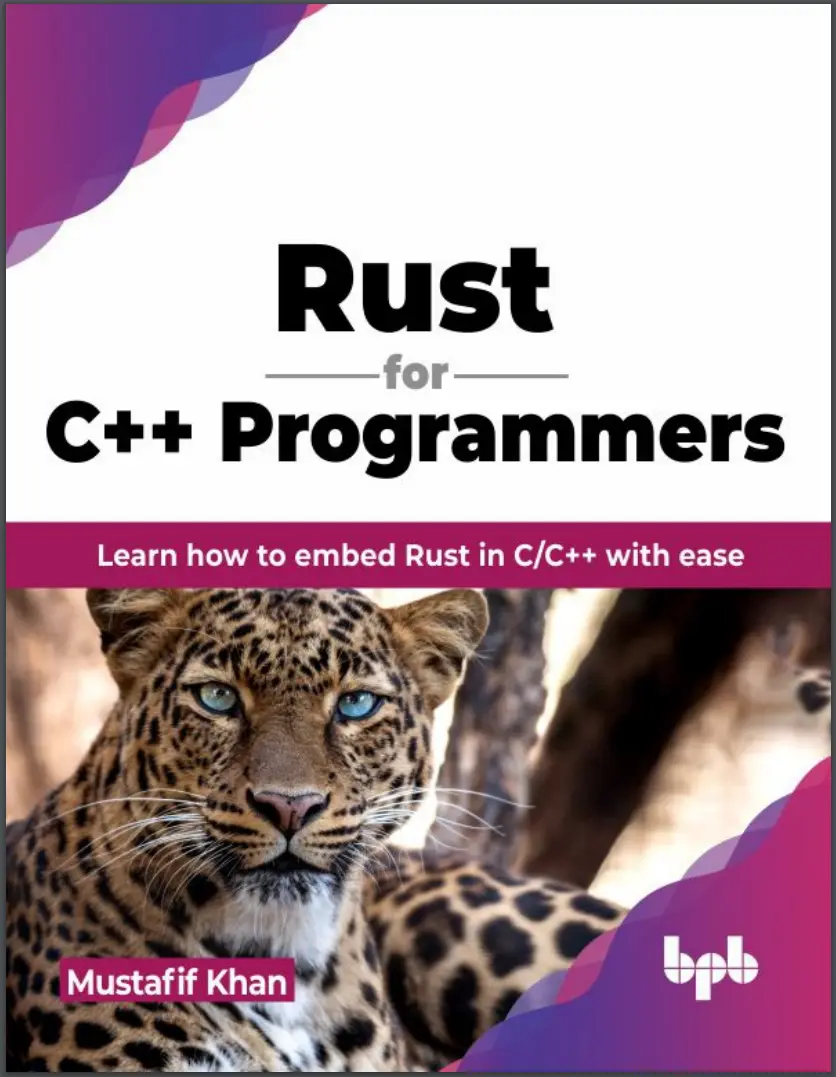
Автор: Khan Mustafif
Дата выхода: 2023
Издательство: BPB Publications
Количество страниц: 431
Размер файла: 2,8 МБ
Тип файла: PDF
Добавил: codelibs
Проверить на вирусыPreface xvii
Chapter 1: Introduction to Ethical Hacking....1
Chapter 2: Building a Penetration Testing Lab....31
Chapter 3: Setting Up for Advanced Penetration Testing Techniques....83
Chapter 4: Passive Reconnaissance....117
Chapter 5: Exploring Open-Source Intelligence....143
Chapter 6: Active Reconnaissance....203
Chapter 7: Performing Vulnerability Assessments....241
Chapter 8: Understanding Network Penetration Testing....283
Chapter 9: Performing Network Penetration Testing....327
Chapter 10: Post-Exploitation Techniques....375
Chapter 11: Delving into Command and Control Tactics....427
Chapter 12: Working with Active Directory Attacks....475
Chapter 13: Advanced Active Directory Attacks....527
Chapter 14: Advanced Wireless Penetration Testing....565
Chapter 15: Social Engineering Attacks....617
Chapter 16: Understanding Website Application Security....639
Chapter 17: Advanced Website Penetration Testing....687
Chapter 18: Best Practices for the Real World....743
Appendix....767
Summary....788
Index....791
Rust is one of the most loved programming languages among developers. It is rapidly being adopted as the industry moves towards memory-safety systems programming languages. If you want to switch from C/C++ to Rust, this book is for you.
“Rust for C++ Programmers” is the perfect guide to help you master the Rust programming language. Beginning with its evolution and comparison to C/C++, the book will help you learn how to install and use the powerful Cargo package manager. The book then covers key topics such as bindings and mutability, ownership, conditionals, loops, functions, structs and enums, and more. The book also explains how to handle errors in Rust. Furthermore, the book explores advanced topics such as smart pointers, concurrency, and even building a desktop application using GTK.
By the end of the book, you will be able to build powerful and resilient apps with Rust.
What you will learn
- Create concurrent programs in Rust using threads.
- Learn how to build a desktop app using GTK.
- Understand how and when (not) to use Unsafe Rust.
- Get familiar with the common error handling patterns in Rust.
- Learn how to build a Desktop app using Tauri.
Who this book is for
This book is for programmers who are familiar with C/C++ and are looking to add Rust to their toolbelt.


