-
1C
-
Agda
-
Agile/Scrum
-
Alef
-
APL
-
Assembler
-
AWK
-
Basic
-
Beta Programming Language
-
Big Data/DataScience
-
C
-
C#
-
C++
-
Cobol
-
Crystal
-
CSS
-
D
-
Dart
-
DataBase (SQL)
-
Delphi
-
F#
-
Flutter
-
Fortran
-
GameDev
-
Git
-
Go (Golang)
-
GPT/AI/ИИ
-
Hacking and Security
-
Haskell
-
HTML
-
Java
-
JavaScript (JS)
-
Julia
-
Kotlin
-
Machine Learning (ML)
-
Natural language processing (NLP)
-
.NET (.NET Core)
-
Pascal
-
PHP
-
Python
-
R
-
Ruby
-
Rust
-
Scratch
-
Swift
-
UML
-
UX/UI
-
Visual Basic
-
Wolfram
-
XML
-
АСУ
-
Проектирование/System Design
-
Сети/Network
-
Статьи
-
Схемотехника/электронные схемы
-
1C
-
Agda
-
Agile/Scrum
-
Alef
-
APL
-
Assembler
-
AWK
-
Basic
-
Beta Programming Language
-
Big Data/DataScience
-
C
-
C#
-
C++
-
Cobol
-
Crystal
-
CSS
-
D
-
Dart
-
DataBase (SQL)
-
Delphi
-
F#
-
Flutter
-
Fortran
-
GameDev
-
Git
-
Go (Golang)
-
GPT/AI/ИИ
-
Hacking and Security
-
Haskell
-
HTML
-
Java
-
JavaScript (JS)
-
Julia
-
Kotlin
-
Machine Learning (ML)
-
Natural language processing (NLP)
-
.NET (.NET Core)
-
Pascal
-
PHP
-
Python
-
R
-
Ruby
-
Rust
-
Scratch
-
Swift
-
UML
-
UX/UI
-
Visual Basic
-
Wolfram
-
XML
-
АСУ
-
Проектирование/System Design
-
Сети/Network
-
Статьи
-
Схемотехника/электронные схемы
Меню
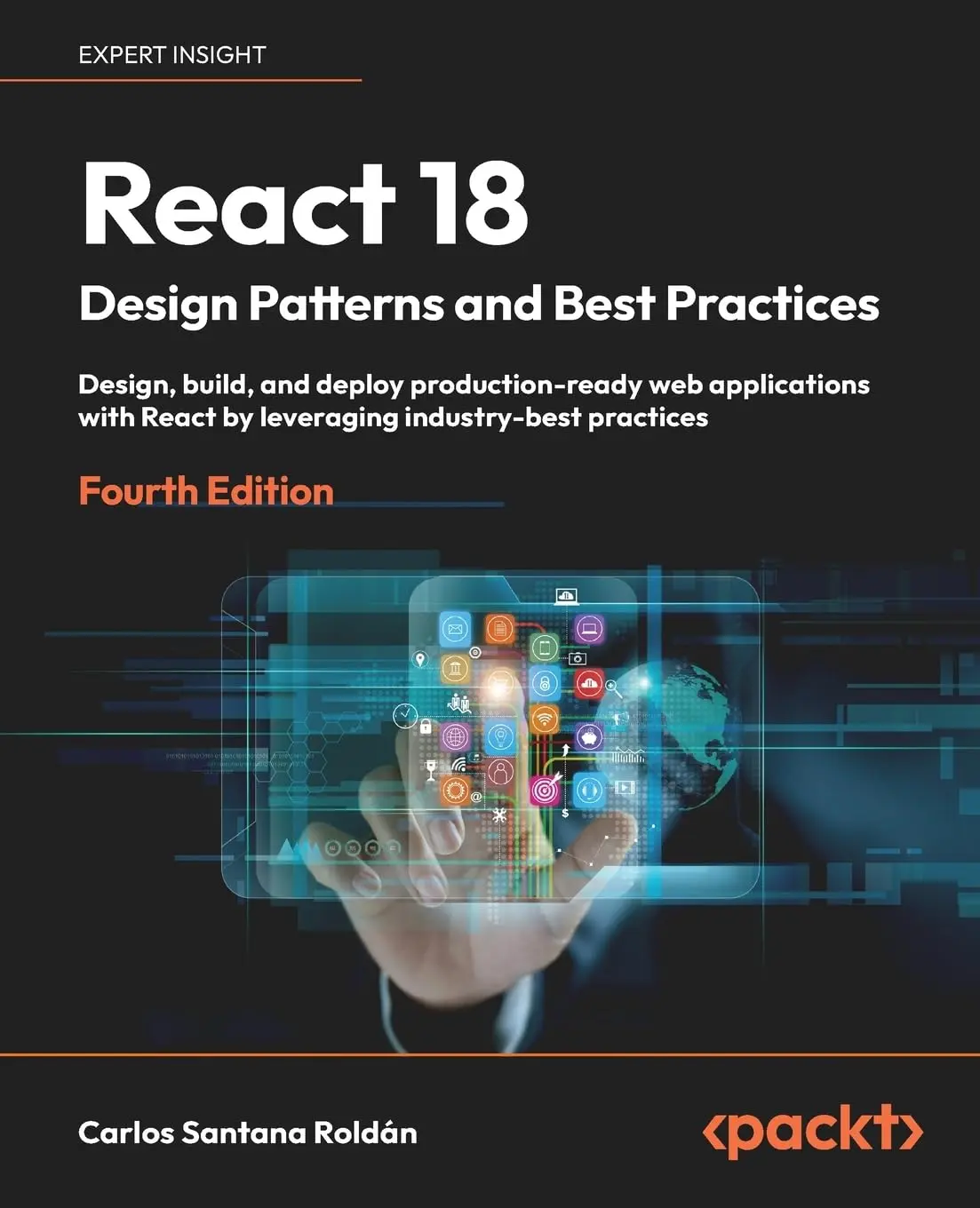
React 18 Design Patterns and Best Practices: Design, build, and deploy production-ready web applications with React by leveraging industry-best practices. 4 Ed
Автор: Roldán Carlos Santana
Дата выхода: 2023
Издательство: Packt Publishing Limited
Количество страниц: 561
Размер файла: 5,2 МБ
Тип файла: PDF
Добавил: codelibs
Проверить на вирусы Дополнительные материалыCover Page....2
Table of Contents....3
Preface....5
Taking Your First Steps with React....16
Technical requirements....16
Differentiating between declarative and imperative programming....18
How React elements work....21
Unlearning everything....23
Understanding JavaScript fatigue....26
Summary....30
Introducing TypeScript....32
Technical requirements....33
TypeScript’s features....33
Converting JavaScript code into TypeScript....34
Types....36
Interfaces....37
Extending interfaces and types....38
Implementing interfaces and types....39
Merging interfaces....40
Enums....41
Namespaces....42
Template literals....44
TypeScript configuration file....44
Summary....46
Cleaning Up Your Code....47
Technical requirements....48
Using JSX....48
Styling code....67
Functional programming....74
Summary....79
Exploring Popular Composition Patterns....81
Technical requirements....81
Communicating components....82
Exploring the container and presentational patterns....85
Understanding HOCs....91
Understanding FunctionAsChild....94
Summary....96
Writing Code for the Browser....97
Technical requirements....98
Understanding and implementing forms....98
Handling events....106
Exploring refs....109
Implementing animations....113
Exploring SVG....115
Summary....117
Making Your Components Look Beautiful....119
Technical requirements....119
CSS in JavaScript....120
Understanding and implementing inline styles....122
Using CSS modules....127
Setting up a project....128
Locally scoped CSS....135
Implementing styled-components....144
Summary....148
Anti-Patterns to Be Avoided....150
Technical requirements....150
Initializing the state using properties....151
Using indexes as a key....154
Spreading properties on DOM elements....157
Summary....159
React Hooks....161
Technical requirements....161
Introducing React Hooks....162
Rules of Hooks....164
Migrating a class component to React Hooks....165
Understanding React effects....171
Understanding the useReducer Hook....194
Summary....202
React Router....203
Technical requirements....203
Installing and configuring React Router....204
Creating our sections....205
Adding parameters to the routes....209
React Router v6.4....217
Summary....224
React 18 New Features....226
Concurrent mode....227
Automatic batching....229
Transitions....230
Suspense on the server....232
New APIs....233
New Hooks....237
Strict mode....242
Node.js latest features....243
Summary....246
Managing Data....247
Technical requirements....247
Introducing the React Context API....248
Consuming context with useContext....251
Introducing React Suspense with SWR....253
Redux Toolkit: a modern approach to Redux....265
Summary....268
Server-Side Rendering....269
Technical requirements....269
Understanding universal applications....270
Reasons for implementing SSR....271
Creating a basic example of SSR....276
Implementing data fetching....284
Using Next.js to create a React application....288
Summary....292
Understanding GraphQL with a Real Project....294
Technical requirements....295
Building a backend login system using PostgreSQL, Apollo Server, GraphQL, Sequelize, and JSON Web Tokens....295
Installing PostgreSQL....295
Creating our backend project....298
Configuring Apollo Server....301
Defining our GraphQL types, queries, and mutations....305
Creating our resolvers....308
Using the Sequelize ORM....312
Authentication functions....316
Running our project for the first time....321
Building a frontend login system with Apollo Client....344
Summary....373
MonoRepo Architecture....374
Technical requirements....375
Advantages of a monorepository and the problems it solves....375
Creating a MonoRepo with NPM Workspaces....378
Implementing TypeScript in our MonoRepo....382
Creating a devtools package to compile packages with Webpack....386
Creating the utils package....398
Creating the API package....406
Creating the frontend package....429
Summary....455
Improving the Performance of Your Applications....457
Technical requirements....458
How reconciliation works....458
Using keys....460
Optimization techniques....461
Tools and libraries....463
Summary....465
Join our community on Discord....466
Testing and Debugging....467
Technical requirements....467
Understanding the benefits of testing....468
Painless JavaScript testing with Jest....470
Introducing Vitest....478
Using React DevTools....489
Summary....490
Deploying to Production....492
Technical requirements....492
Creating our first DigitalOcean Droplet....492
Configuring nginx, PM2, and a domain....507
Implementing CircleCI for continuous integration....513
Summary....526
Other Books You May Enjoy....527
Index....532
React helps you work smarter, not harder ― but to reap the benefits of this popular JavaScript library and its components, you need a straightforward guide that will teach you how to make the most of it.
React 18 Design Patterns and Best Practices will help you use React effectively to make your applications more flexible, easier to maintain, and improve their performance, while giving your workflow a huge boost. With a better organization of topics and knowledge about best practices added to your developer toolbox, the updated fourth edition ensures an enhanced learning experience.
The book is split into three parts; the first will teach you the fundamentals of React patterns, the second will dive into how React works, and the third will focus on real-world applications. All the code samples are updated to the latest version of React and you’ll also find plenty of new additions that explore React 18 and Node 19’s newest features, alongside MonoRepo Architecture and a dedicated chapter on TypeScript.
By the end of this book, you'll be able to efficiently build and deploy real-world React web applications.
What you will learn
- Get familiar with the new React 18 and Node 19 features
- Explore TypeScript’s basic and advanced capabilities
- Make components communicate with each other by applying various patterns and techniques
- Dive into MonoRepo architecture
- Use server-side rendering to make applications load faster
- Write a comprehensive set of tests to create robust and maintainable code
- Build high-performing applications by styling and optimizing React components
Who This Book Is For
This book is for web developers who want to master React by learning key design patterns and best practices in real-world application development. You’ll need an intermediate-level experience with React and JavaScript before you get started.


