-
1C
-
Agda
-
Agile/Scrum
-
Alef
-
APL
-
Assembler
-
AWK
-
Basic
-
Beta Programming Language
-
Big Data/DataScience
-
C
-
C#
-
C++
-
Cobol
-
Crystal
-
CSS
-
D
-
Dart
-
DataBase (SQL)
-
Delphi
-
F#
-
Flutter
-
Fortran
-
GameDev
-
Git
-
Go (Golang)
-
GPT/AI/ИИ
-
Hacking and Security
-
Haskell
-
HTML
-
Java
-
JavaScript (JS)
-
Julia
-
Kotlin
-
Machine Learning (ML)
-
Natural language processing (NLP)
-
.NET (.NET Core)
-
Pascal
-
PHP
-
Python
-
R
-
Ruby
-
Rust
-
Scratch
-
Swift
-
UML
-
UX/UI
-
Visual Basic
-
Wolfram
-
XML
-
АСУ
-
Проектирование/System Design
-
Сети/Network
-
Статьи
-
Схемотехника/электронные схемы
-
1C
-
Agda
-
Agile/Scrum
-
Alef
-
APL
-
Assembler
-
AWK
-
Basic
-
Beta Programming Language
-
Big Data/DataScience
-
C
-
C#
-
C++
-
Cobol
-
Crystal
-
CSS
-
D
-
Dart
-
DataBase (SQL)
-
Delphi
-
F#
-
Flutter
-
Fortran
-
GameDev
-
Git
-
Go (Golang)
-
GPT/AI/ИИ
-
Hacking and Security
-
Haskell
-
HTML
-
Java
-
JavaScript (JS)
-
Julia
-
Kotlin
-
Machine Learning (ML)
-
Natural language processing (NLP)
-
.NET (.NET Core)
-
Pascal
-
PHP
-
Python
-
R
-
Ruby
-
Rust
-
Scratch
-
Swift
-
UML
-
UX/UI
-
Visual Basic
-
Wolfram
-
XML
-
АСУ
-
Проектирование/System Design
-
Сети/Network
-
Статьи
-
Схемотехника/электронные схемы
Меню
Machine Learning Model Serving Patterns and Best Practices: A definitive guide to deploying, monitoring, and providing accessibility to ML models in production
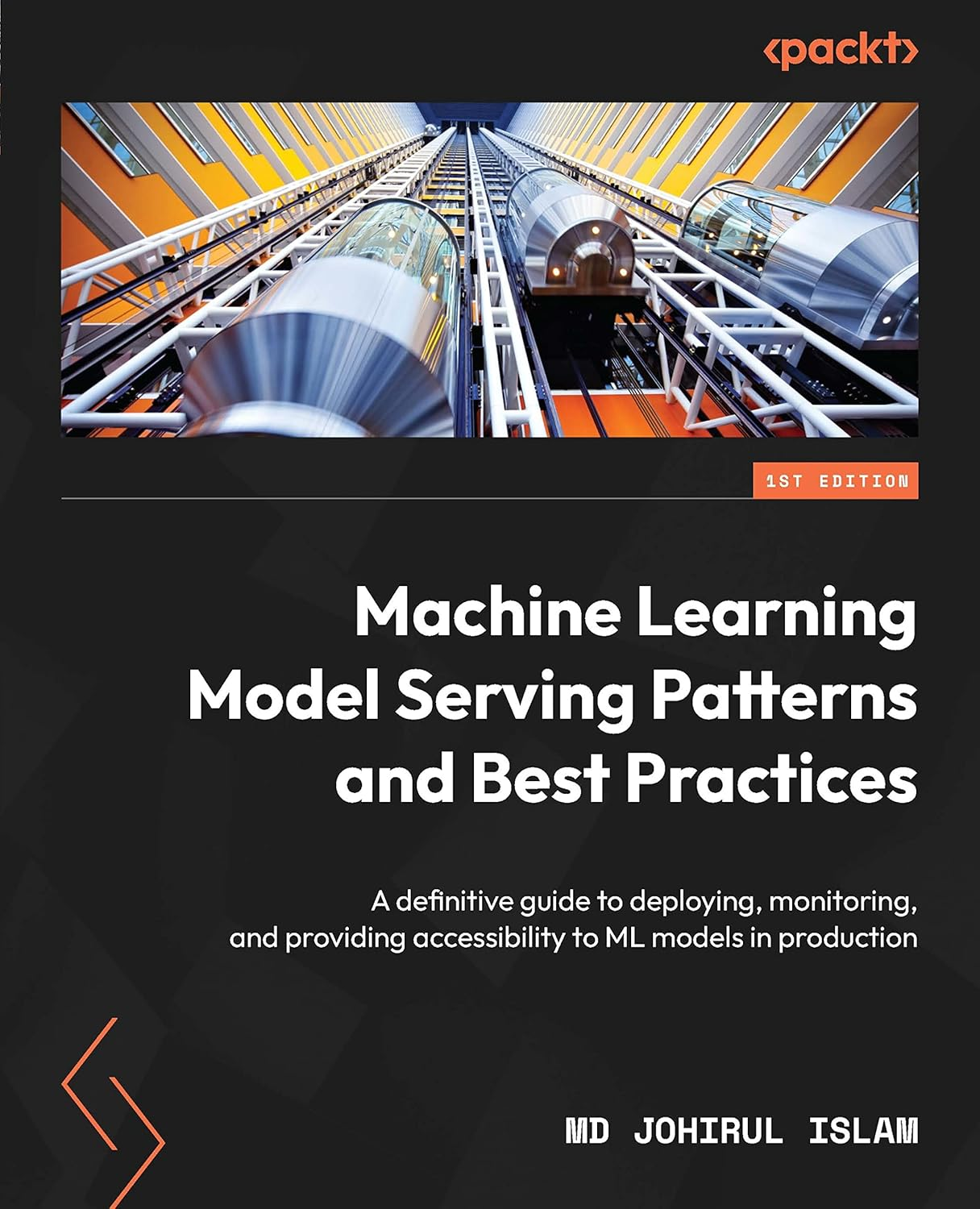
Автор: Islam Md Johirul
Дата выхода: 2022
Издательство: Packt Publishing Limited
Количество страниц: 418
Размер файла: 11,1 МБ
Тип файла: PDF
Добавил: codelibs
Проверить на вирусы Дополнительные материалыCover Page....2
Table of Contents....3
Preface....5
Part 1:Introduction to Model Serving....13
Chapter 1: Introducing Model Serving....14
Technical requirements....14
What is serving?....15
What are models?....17
What is model serving?....19
Understanding the importance of model serving....24
Using existing tools to serve models....26
Summary....27
Chapter 2: Introducing Model Serving Patterns....29
Design patterns in software engineering....29
Understanding the value of model serving patterns....33
ML serving patterns....37
Summary....51
Further reading....52
Part 2:Patterns and Best Practices of Model Serving....53
Chapter 3: Stateless Model Serving....54
Technical requirements....54
Understanding stateful and stateless functions....55
States in machine learning models....62
Summary....97
Chapter 4: Continuous Model Evaluation....99
Technical requirements....99
Introducing continuous model evaluation....100
The necessity of continuous model evaluation....105
Continuous model evaluation use cases....124
Evaluating a model continuously....130
Monitoring model performance when predicting rare classes....137
Summary....139
Further reading....140
Chapter 5: Keyed Prediction....141
Technical requirements....141
Introducing keyed prediction....142
Exploring keyed prediction use cases....145
Exploring techniques for keyed prediction....162
Summary....174
Further reading....174
Chapter 6: Batch Model Serving....175
Technical requirements....175
Introducing batch model serving....176
Different types of batch model serving....179
Example scenarios of batch model serving....191
Techniques in batch model serving....193
Limitations of batch serving....199
Summary....201
Further reading....201
Chapter 7: Online Learning Model Serving....202
Technical requirements....202
Introducing online model serving....202
Use cases for online model serving....215
Challenges in online model serving....219
Implementing online model serving....225
Summary....229
Further reading....229
Chapter 8: Two-Phase Model Serving....231
Technical requirements....231
Introducing two-phase model serving....232
Exploring two-phase model serving techniques....234
Use cases of two-phase model serving....249
Summary....254
Further reading....254
Chapter 9: Pipeline Pattern Model Serving....256
Technical requirements....256
Introducing the pipeline pattern....257
Introducing Apache Airflow....260
Demonstrating a machine learning pipeline using Airflow....271
Advantages and disadvantages of the pipeline pattern....276
Summary....277
Further reading....278
Chapter 10: Ensemble Model Serving Pattern....279
Technical requirements....279
Introducing the ensemble pattern....280
Using ensemble pattern techniques....282
End-to-end dummy example of serving the model....291
Summary....293
Chapter 11: Business Logic Pattern....295
Technical requirements....295
Introducing the business logic pattern....295
Technical approaches to business logic in model serving....299
Summary....304
Part 3:Introduction to Tools for Model Serving....306
Chapter 12: Exploring TensorFlow Serving....307
Technical requirements....307
Introducing TensorFlow Serving....308
Using TensorFlow Serving to serve models....312
Summary....323
Further reading....324
Chapter 13: Using Ray Serve....325
Technical requirements....325
Introducing Ray Serve....325
Using Ray Serve to serve a model....335
Summary....345
Further reading....346
Chapter 14: Using BentoML....347
Technical requirements....347
Introducing BentoML....347
Using BentoML to serve a model....362
Summary....366
Further reading....366
Part 4:Exploring Cloud Solutions....367
Chapter 15: Serving ML Models using a Fully Managed AWS Sagemaker Cloud Solution....368
Technical requirements....368
Introducing Amazon SageMaker....368
Using Amazon SageMaker to serve a model....373
Summary....386
Index....388
Why subscribe?....410
Other Books You May Enjoy....412
Packt is searching for authors like you....416
Share Your Thoughts....416
Download a free PDF copy of this book....417
Serving patterns enable data science and ML teams to bring their models to production. Most ML models are not deployed for consumers, so ML engineers need to know the critical steps for how to serve an ML model.
This book will cover the whole process, from the basic concepts like stateful and stateless serving to the advantages and challenges of each. Batch, real-time, and continuous model serving techniques will also be covered in detail. Later chapters will give detailed examples of keyed prediction techniques and ensemble patterns. Valuable associated technologies like TensorFlow severing, BentoML, and RayServe will also be discussed, making sure that you have a good understanding of the most important methods and techniques in model serving. Later, you'll cover topics such as monitoring and performance optimization, as well as strategies for managing model drift and handling updates and versioning. The book will provide practical guidance and best practices for ensuring that your model serving pipeline is robust, scalable, and reliable. Additionally, this book will explore the use of cloud-based platforms and services for model serving using AWS SageMaker with the help of detailed examples.
By the end of this book, you'll be able to save and serve your model using state-of-the-art techniques.
What you will learn
- Explore specific patterns in model serving that are crucial for every data science professional
- Understand how to serve machine learning models using different techniques
- Discover the various approaches to stateless serving
- Implement advanced techniques for batch and streaming model serving
- Get to grips with the fundamental concepts in continued model evaluation
- Serve machine learning models using a fully managed AWS Sagemaker cloud solution
Who this book is for
This book is for machine learning engineers and data scientists who want to bring their models into production. Those who are familiar with machine learning and have experience of using machine learning techniques but are looking for options and strategies to bring their models to production will find great value in this book. Working knowledge of Python programming is a must to get started.


