-
1C
-
Agda
-
Agile/Scrum
-
Alef
-
APL
-
Assembler
-
AWK
-
Basic
-
Beta Programming Language
-
Big Data/DataScience
-
C
-
C#
-
C++
-
Cobol
-
Crystal
-
CSS
-
D
-
Dart
-
DataBase (SQL)
-
Delphi
-
F#
-
Flutter
-
Fortran
-
GameDev
-
Git
-
Go (Golang)
-
GPT/AI/ИИ
-
Hacking and Security
-
Haskell
-
HTML
-
Java
-
JavaScript (JS)
-
Julia
-
Kotlin
-
Machine Learning (ML)
-
Natural language processing (NLP)
-
.NET (.NET Core)
-
Pascal
-
PHP
-
Python
-
R
-
Ruby
-
Rust
-
Scratch
-
Swift
-
UML
-
UX/UI
-
Visual Basic
-
Wolfram
-
XML
-
АСУ
-
Проектирование/System Design
-
Сети/Network
-
Статьи
-
Схемотехника/электронные схемы
-
1C
-
Agda
-
Agile/Scrum
-
Alef
-
APL
-
Assembler
-
AWK
-
Basic
-
Beta Programming Language
-
Big Data/DataScience
-
C
-
C#
-
C++
-
Cobol
-
Crystal
-
CSS
-
D
-
Dart
-
DataBase (SQL)
-
Delphi
-
F#
-
Flutter
-
Fortran
-
GameDev
-
Git
-
Go (Golang)
-
GPT/AI/ИИ
-
Hacking and Security
-
Haskell
-
HTML
-
Java
-
JavaScript (JS)
-
Julia
-
Kotlin
-
Machine Learning (ML)
-
Natural language processing (NLP)
-
.NET (.NET Core)
-
Pascal
-
PHP
-
Python
-
R
-
Ruby
-
Rust
-
Scratch
-
Swift
-
UML
-
UX/UI
-
Visual Basic
-
Wolfram
-
XML
-
АСУ
-
Проектирование/System Design
-
Сети/Network
-
Статьи
-
Схемотехника/электронные схемы
Меню
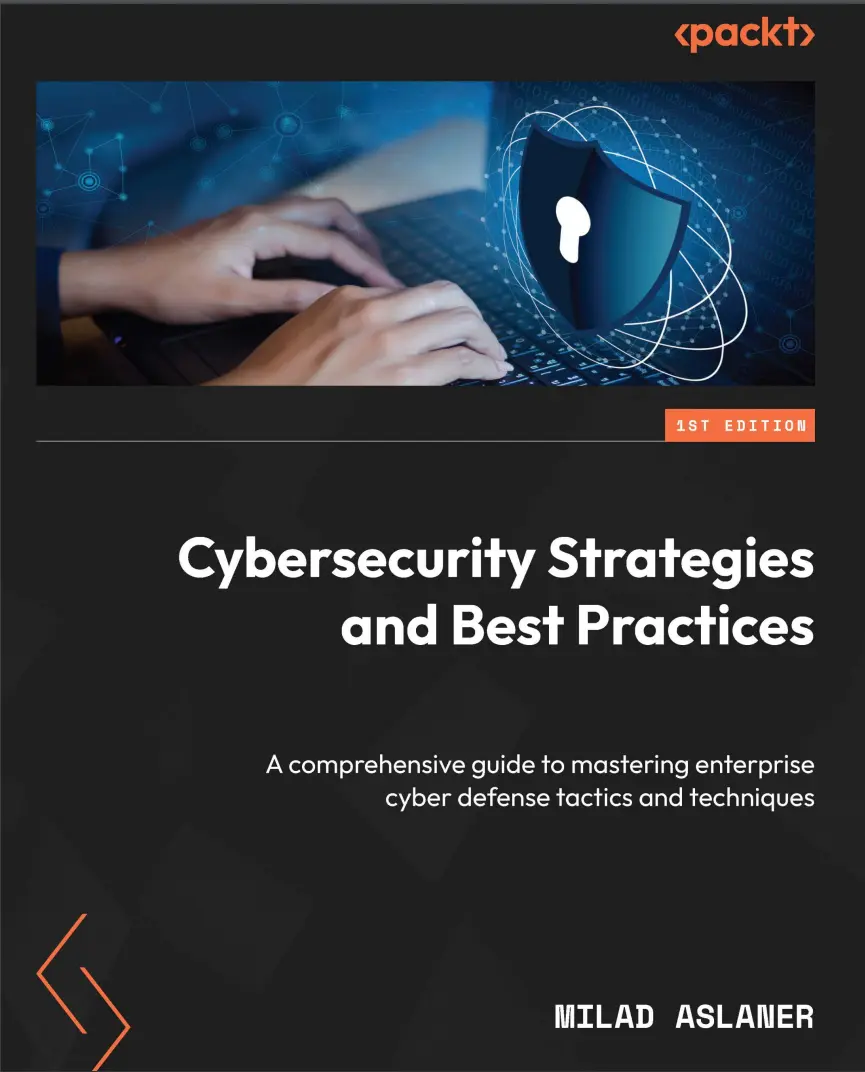
Cybersecurity Strategies and Best Practices: A comprehensive guide to mastering enterprise cyber defense tactics and techniques
Автор: Aslaner Milad
Дата выхода: 2024
Издательство: Packt Publishing Limited
Количество страниц: 252
Размер файла: 2,3 МБ
Тип файла: PDF
Добавил: codelibs
Проверить на вирусыCover....1
Title Page....2
Copyright and Credits....3
Contributors....5
Table of Contents....8
Preface....14
Chapter 1: Profiling Cyber Adversaries and Their Tactics....20
Types of threat actors....20
Summary of threat actor categories....22
Motivations and objectives of threat actors....28
Tactics, Techniques, and Procedures (TTPs)....29
Real-world examples of cyberattacks and consequences....32
Nation-state actors: NotPetya attack (2017)....32
Nation-state actors: SolarWinds supply chain attack....33
Cybercriminals: WannaCry ransomware attack (2017)....35
Cybercriminals: Colonial Pipeline ransomware attack....36
Summary....38
Chapter 2: Identifying and Assessing Organizational Weaknesses....40
Understanding organizational weaknesses and vulnerabilities....41
Types of organizational weaknesses....41
Types of organizational vulnerabilities....42
Real-world examples....43
Techniques for identifying and assessing weaknesses....44
Security audits....44
Vulnerability assessments....45
Threat modeling....46
Penetration testing....48
Social engineering tests....49
Conducting risk assessments....51
Risk assessment methodologies....51
Identifying assets and establishing the scope....52
Prioritizing risks and developing mitigation strategies....55
Documentation and reporting....56
Monitoring and reviewing....57
Prioritizing and remediating weaknesses....58
Understanding risk and impact levels....58
Risk mitigation strategies....59
Attack surface reduction....60
Continuous monitoring and reassessment....61
Summary....62
Chapter 3: Staying Ahead: Monitoring Emerging Threats and Trends....64
The importance of monitoring emerging threats and trends....65
Understanding the cybersecurity landscape....65
The risks of emerging threats....67
The role of threat intelligence....68
From awareness to action....69
The attacker’s mindset....71
The significance of understanding the attacker’s perspective....71
Motivations and objectives of attackers....72
Psychological and behavioral traits of attackers....73
The role of the attacker’s mindset in strengthening cybersecurity....74
Ethical considerations and legal boundaries....75
Ethical hacking and responsible disclosure....76
The role of innovation in cybersecurity....77
The benefits of and need for innovation....77
Driving innovation within organizations....78
Emerging technologies and future trends....79
Summary....80
Chapter 4: Assessing Your Organization’s Security Posture....82
The components of a comprehensive security posture....82
Evaluating security technologies....83
Understanding the role of security processes....84
The human factor in a security posture....85
Effective metrics for security programs and teams....86
Understanding the importance of security metrics....86
Selecting the right metrics....87
Implementing and tracking security metrics....90
Asset inventory management and its role in security posture....90
Understanding asset inventory in cybersecurity....90
Building a comprehensive asset inventory....91
Maintaining and updating asset inventory....92
Continuously monitoring and improving your security posture....93
Implementing continuous monitoring practices....93
Responding to incidents and implementing remediation measures....94
The technological landscape in security posture....95
Summary....97
Chapter 5: Developing a Comprehensive Modern Cybersecurity Strategy....98
Key elements of a successful cybersecurity strategy....99
Foundational principles and components....99
Setting objectives and goals....100
The role and significance of each element....101
Aligning cybersecurity strategy with business objectives....102
Correlation of organizational goals and cybersecurity endeavors....102
Prioritizing cybersecurity based on business impact....103
Communicating cybersecurity’s value to stakeholders....105
Risk management and cybersecurity strategy....106
Integrating risk management methodologies in strategy formulation....106
Conducting comprehensive risk assessments....108
Prioritization of mitigation strategies....110
Incident response planning and preparedness....111
Designing tailored incident response procedures....112
The incident management life cycle....114
Tools, technologies, and human elements in incident response....115
Security awareness and training programs....116
Tailored training for organizational roles....117
Continuous evaluation and improvement....118
Fostering a security-first mindset....120
Summary....121
Chapter 6: Aligning Security Measures with Business Objectives....122
The importance of aligning security with business objectives....123
The critical role of cybersecurity in business environments....123
Connecting business objectives and security measures successfully....124
Measuring the impact and value of aligned cybersecurity initiatives....126
Prioritizing security initiatives based on risk and business impact....128
The importance of risk assessment and BIA....128
Prioritizing security initiatives with frameworks....129
Communicating prioritized security initiatives....131
Communicating the value of security investments....132
Translating technical metrics to business value....132
Developing effective communication strategies....134
Engaging and building trust with stakeholders....136
Summary....137
Chapter 7: Demystifying Technology and Vendor Claims....138
Understanding technology and vendor claims....139
Deciphering the language of cybersecurity claims....139
Separating facts from marketing in vendor claims....142
Evaluating the substance of cybersecurity solutions....143
Critically analyzing claims....144
Developing a skeptical mindset....145
Contextual analysis of vendor claims....146
Identifying biases and unsupported assertions....147
Utilizing analyst and third-party testing reports....149
Understanding and accessing external resources with practical examples....149
Interpreting methodologies and results....151
Applying findings to an organizational context....152
Thoroughly assessing vendors....153
Evaluating vendor credibility and track record....154
Analyzing customer feedback and post-sale support....155
Aligning vendor offerings with organizational requirements....156
Summary....157
Chapter 8: Leveraging Existing Tools for Enhanced Security....158
Identifying existing and required tools and technologies....158
Cataloging your cybersecurity arsenal....159
Assessing tool effectiveness and relevance....160
Identifying gaps and future needs....161
Repurposing and integrating tools for enhanced security....162
Repurposing of cybersecurity tools....162
Integration of security tools....163
Maximizing efficiency through tool synergy....164
Optimizing tool usage for maximum value....165
Advanced configuration and customization of tools....165
Performance monitoring and regular audits....166
Training and knowledge sharing....167
Summary....168
Chapter 9: Selecting and Implementing the Right Cybersecurity Solutions....170
Factors to consider when selecting cybersecurity solutions....171
Understanding the threat landscape....172
Assessing system compatibility and integration....173
Scalability and future-proofing cybersecurity solutions....178
Compliance and industry standards in cybersecurity solutions....179
Best practices for selecting security tools....181
Conducting comprehensive market research....182
Involving key stakeholders in the selection process....183
Performing risk assessment and management....185
Evaluating cost-effectiveness and ROI in cybersecurity solutions....186
Implementing and integrating cybersecurity solutions....188
Developing a strategic implementation plan for cybersecurity solutions....189
User training and adoption in cybersecurity implementation....191
Monitoring, maintaining, and regularly updating cybersecurity solutions....193
Summary....195
Chapter 10: Bridging the Gap between Technical and Non-Technical Stakeholders....196
The Importance of Effective Communication and Collaboration....197
Understanding communication barriers in cybersecurity....197
The role of effective communication in cybersecurity success....198
Strategies for successful collaboration between technical and non-technical stakeholders....199
Translating technical concepts for non-technical stakeholders....200
Simplifying complex cybersecurity terminology....201
Contextualizing cybersecurity in business terms....202
Effective visualization and presentation of cybersecurity data....203
Strategies for successful collaboration....204
Building cross-functional cybersecurity teams....205
Establishing regular cybersecurity workshops and training sessions....206
Implementing collaborative cybersecurity decision-making processes....207
Summary....208
Chapter 11: Building a Cybersecurity-Aware Organizational Culture....210
The importance of a cybersecurity-aware organizational culture....211
Understanding cybersecurity as a business imperative....211
Assessing the risks and costs of cyber threats....212
The role of leadership in shaping cybersecurity culture....213
Roles and responsibilities of different stakeholders....214
Defining stakeholder roles in cybersecurity....215
Interdepartmental collaboration in cybersecurity....216
Engaging external stakeholders in cybersecurity efforts....217
Promoting shared responsibility for cybersecurity....218
Creating a culture of cybersecurity awareness....219
Building cross-functional cybersecurity teams....220
Measuring and reinforcing cybersecurity culture....221
Summary....222
Chapter 12: Collaborating with Industry Partners and Sharing Threat Intelligence....224
The importance of collaboration and threat intelligence sharing....225
The imperative for collaborative defense....225
Mechanisms of threat intelligence sharing....226
Best practices in collaboration and sharing....227
Building trust and maintaining confidentiality in information sharing....228
Establishing trust among partners....229
Maintaining confidentiality in information sharing....229
Balancing transparency and confidentiality....230
Leveraging shared threat intelligence for improved security....231
Integrating shared intelligence into security operations....231
Collaborative incident response and recovery....232
Promoting shared responsibility for cybersecurity....234
Cultivating a culture of cybersecurity awareness....234
Engaging in public-private partnerships (PPPs)....235
Leveraging technology for collective defense....236
Summary....237
Index....238
Other Books You May Enjoy....249
If you are a cybersecurity professional looking for practical and actionable guidance to strengthen your organization's security, then this is the book for you. Cybersecurity Strategies and Best Practices is a comprehensive guide that offers pragmatic insights through real-world case studies. Written by a cybersecurity expert with extensive experience in advising global organizations, this guide will help you align security measures with business objectives while tackling the ever-changing threat landscape. You'll understand the motives and methods of cyber adversaries and learn how to navigate the complexities of implementing defense measures.
As you progress, you'll delve into carefully selected real-life examples that can be applied in a multitude of security scenarios. You'll also learn how to cut through the noise and make informed decisions when it comes to cybersecurity solutions by carefully assessing vendor claims and technology offerings. Highlighting the importance of a comprehensive approach, this book bridges the gap between technical solutions and business strategies to help you foster a secure organizational environment.
By the end, you'll have the knowledge and tools necessary to improve your organization's cybersecurity posture and navigate the rapidly changing threat landscape.
What you will learn
- Adapt to the evolving threat landscape by staying up to date with emerging trends
- Identify and assess vulnerabilities and weaknesses within your organization's enterprise network and cloud environment
- Discover metrics to measure the effectiveness of security controls
- Explore key elements of a successful cybersecurity strategy, including risk management, digital forensics, incident response, and security awareness programs
- Get acquainted with various threat intelligence sharing platforms and frameworks
Who this book is for
This book is for security professionals and decision makers tasked with evaluating and selecting cybersecurity solutions to protect their organization from evolving threats. While a foundational understanding of cybersecurity is beneficial, it's not a prerequisite.


