-
1C
-
Agda
-
Agile/Scrum
-
Alef
-
APL
-
Assembler
-
AWK
-
Basic
-
Beta Programming Language
-
Big Data/DataScience
-
C
-
C#
-
C++
-
Cobol
-
Crystal
-
CSS
-
D
-
Dart
-
DataBase (SQL)
-
Delphi
-
F#
-
Flutter
-
Fortran
-
GameDev
-
Git
-
Go (Golang)
-
GPT/AI/ИИ
-
Hacking and Security
-
Haskell
-
HTML
-
Java
-
JavaScript (JS)
-
Julia
-
Kotlin
-
Machine Learning (ML)
-
Natural language processing (NLP)
-
.NET (.NET Core)
-
Pascal
-
PHP
-
Python
-
R
-
Ruby
-
Rust
-
Scratch
-
Swift
-
UML
-
UX/UI
-
Visual Basic
-
Wolfram
-
XML
-
АСУ
-
Проектирование/System Design
-
Сети/Network
-
Статьи
-
Схемотехника/электронные схемы
-
1C
-
Agda
-
Agile/Scrum
-
Alef
-
APL
-
Assembler
-
AWK
-
Basic
-
Beta Programming Language
-
Big Data/DataScience
-
C
-
C#
-
C++
-
Cobol
-
Crystal
-
CSS
-
D
-
Dart
-
DataBase (SQL)
-
Delphi
-
F#
-
Flutter
-
Fortran
-
GameDev
-
Git
-
Go (Golang)
-
GPT/AI/ИИ
-
Hacking and Security
-
Haskell
-
HTML
-
Java
-
JavaScript (JS)
-
Julia
-
Kotlin
-
Machine Learning (ML)
-
Natural language processing (NLP)
-
.NET (.NET Core)
-
Pascal
-
PHP
-
Python
-
R
-
Ruby
-
Rust
-
Scratch
-
Swift
-
UML
-
UX/UI
-
Visual Basic
-
Wolfram
-
XML
-
АСУ
-
Проектирование/System Design
-
Сети/Network
-
Статьи
-
Схемотехника/электронные схемы
Меню
Boost C++ Application Development Cookbook: Recipes to simplify your application development. 2 Ed
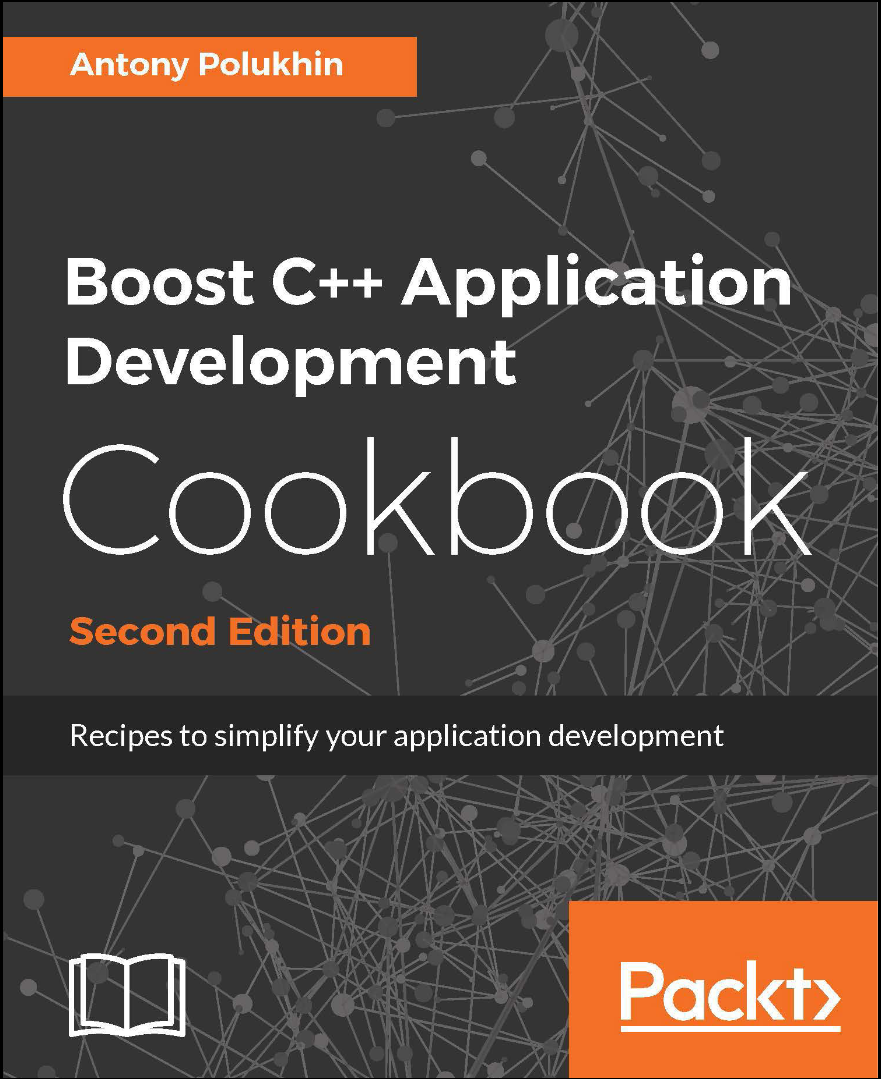
Автор: Polukhin Antony
Дата выхода: 2017
Издательство: Packt Publishing Limited
Количество страниц: 433
Размер файла: 2,3 МБ
Тип файла: PDF
Добавил: codelibs
Проверить на вирусыCover....1
Title Page....2
Copyright....3
Credits....4
About the Author....5
About the Reviewer....7
www.PacktPub.com....8
Customer Feedback....9
Table of Contents....10
Preface....27
Chapter 1: Starting to Write Your Application....33
Introduction....33
Getting configuration options....34
Getting ready....34
How to do it.......34
How it works.......36
There's more.......36
See also....39
Storing any value in a container/variable....39
Getting ready....39
How to do it.......40
How it works.......40
There's more.......41
See also....42
Storing multiple chosen types in a container/variable....42
Getting ready....43
How to do it.......43
How it works.......44
There's more.......44
See also....45
Using a safer way to work with a container that stores multiple chosen types....45
Getting ready....47
How to do it.......47
How it works.......49
There's more.......49
See also....50
Returning a value or flag where there is no value....50
Getting ready....50
How to do it.......50
How it works.......52
There's more.......52
See also....53
Returning an array from a function....53
Getting ready....53
How to do it.......53
How it works.......54
There's more.......54
See also....55
Combining multiple values into one....55
Getting ready....55
How to do it.......56
How it works.......57
There's more.......57
See also....58
Binding and reordering function parameters....59
Getting ready....59
How to do it.......59
How it works.......61
There's more.......61
See also....62
Getting a human-readable type name....63
Getting ready....63
How to do it....64
How it works.......64
There's more.......64
See also....65
Using the C++11 move emulation....65
Getting ready....65
How to do it.......65
How it works.......68
There's more.......68
See also....68
Making a noncopyable class....69
Getting ready....69
How to do it.......70
How it works.......70
See also....71
Making a noncopyable but movable class....71
Getting ready....71
How to do it.......72
How it works.......74
There's more.......74
See also....76
Using C++14 and C++11 algorithms....76
Getting ready....76
How to do it.......77
How it works.......77
There's more.......77
See also....78
Chapter 2: Managing Resources....79
Introduction....79
Managing local pointers to classes that do not leave scope....80
Getting started....81
How to do it.......81
How it works.......82
There's more.......83
See also....84
Reference counting of pointers to classes used across functions....84
Getting ready....85
How to do it.......85
How it works.......86
There's more.......86
See also....88
Managing pointers to arrays that do not leave scope....88
Getting ready....88
How to do it.......89
How it works.......89
There's more.......90
See also....90
Reference counting of pointers to arrays used across functions....91
Getting ready....91
How to do it.......92
How it works.......94
There's more.......94
See also....95
Storing any functional objects in a variable....95
Getting ready....96
How to do it.......96
How it works.......97
There's more.......97
See also....98
Passing function pointer in a variable....98
Getting ready....98
How to do it.......98
How it works.......98
There's more.......99
See also....99
Passing C++11 lambda functions in a variable....99
Getting ready....99
How to do it.......100
There's more.......100
See also....101
Containers of pointers....101
Getting ready....103
How to do it.......103
How it works.......104
There's more.......104
See also....105
Do it at scope exit!....105
Getting ready....106
How to do it.......106
How it works.......106
There's more.......107
See also....108
Initializing the base class by the member of the derived class....108
Getting started....109
How to do it.......109
How it works.......110
There's more.......110
See also....111
Chapter 3: Converting and Casting....112
Introduction....112
Converting strings to numbers....113
Getting ready....113
How to do it.......114
How it works.......114
There's more.......115
See also....116
Converting numbers to strings....116
Getting ready....116
How to do it.......117
How it works.......118
There's more.......118
See also....119
Converting numbers to numbers....119
Getting ready....120
How to do it.......120
How it works.......121
There's more.......121
See also....122
Converting user-defined types to/from strings....122
How to do it.......123
How it works.......124
There's more.......124
See also....125
Converting smart pointers....126
Getting started....126
How to do it.......127
How it works.......127
There's more.......128
See also....128
Casting polymorphic objects....128
Getting started....129
How to do it.......129
How it works.......129
There's more.......130
See also....130
Parsing simple input....130
Getting ready....131
How to do it.......132
How it works.......133
There's more.......134
See also....136
Parsing complex input....137
Getting ready....137
How to do it.......137
How it works.......140
There's more.......141
See also....142
Chapter 4: Compile-Time Tricks....143
Introduction....143
Checking sizes at compile time....144
Getting ready....144
How to do it.......145
How it works.......145
There's more.......147
See also....149
Enabling function template usage for integral types....149
Getting ready....149
How to do it.......150
How it works.......151
There's more.......152
See also....153
Disabling function template usage for real types....153
Getting ready....154
How to do it.......154
How it works.......155
There's more.......156
See also....156
Creating a type from a number....157
Getting ready....157
How to do it.......157
How it works.......158
There's more.......159
See also....160
Implementing a type trait....160
Getting ready....160
How to do it.......160
How it works.......161
There's more.......161
See also....161
Selecting an optimal operator for a template parameter....162
Getting ready....162
How to do it.......162
How it works.......164
There's more.......164
See also....166
Getting a type of expression in C++03....166
Getting ready....166
How to do it.......166
How it works.......167
There's more.......167
See also....169
Chapter 5: Multithreading....170
Introduction....170
Creating a thread of execution....171
Getting ready....171
How to do it.......171
How it works.......172
There's more.......173
See also....175
Syncing access to a common resource....175
Getting ready....176
How to do it.......177
How it works.......178
There's more.......179
See also....180
Fast access to common resource using atomics....181
Getting ready....181
How to do it.......181
How it works.......182
There's more.......183
See also....184
Creating work_queue class....184
Getting ready....184
How to do it.......185
How it works.......187
There's more.......188
See also....189
Multiple-readers-single-writer lock....190
Getting ready....191
How to do it.......191
How it works.......192
There's more.......192
See also....193
Creating variables that are unique per thread....193
Getting ready....194
How to do it.......194
How it works.......194
There's more.......195
See also....195
Interrupting a thread....196
Getting ready....196
How to do it.......196
How it works.......197
There's more.......197
See also....198
Manipulating a group of threads....198
Getting ready....199
How to do it.......199
How it works.......199
There's more.......200
See also....200
Initializing a shared variable safely....200
Getting ready....201
How to do it.......202
How it works.......202
There's more......203
See also....204
Locking multiple mutexes....204
Getting ready....205
How to do it.......205
How it works.......206
There's more.......207
See also....207
Chapter 6: Manipulating Tasks....208
Introduction....208
Before you start....209
Registering a task for an arbitrary data type processing....209
Getting ready....209
How to do it.......209
How it works.......212
There's more.......213
See also....213
Making timers and processing timer events as tasks....214
Getting ready....214
How to do it.......215
How it works.......217
There's more.......219
See also....219
Network communication as a task....219
Getting ready....220
How to do it.......220
How it works.......224
There's more.......228
See also....229
Accepting incoming connections....229
Getting ready....230
How to do it.......230
How it works.......232
There's more.......233
See also....234
Executing different tasks in parallel....234
Getting started....234
How to do it.......234
How it works.......235
There's more.......236
See also....236
Pipeline tasks processing....236
Getting ready....238
How to do it.......238
How it works.......241
There's more.......242
See also....242
Making a nonblocking barrier....242
Getting ready....244
How to do it.......244
How it works.......245
There's more.......246
See also....246
Storing an exception and making a task from it....247
Getting ready....247
How to do it.......247
How it works.......249
There's more.......250
See also....250
Getting and processing system signals as tasks....251
Getting ready....251
How to do it.......252
How it works.......254
There is more.......254
See also....254
Chapter 7: Manipulating Strings....256
Introduction....256
Changing cases and case-insensitive comparison....256
Getting ready....257
How to do it.......257
How it works.......258
There's more.......259
See also....259
Matching strings using regular expressions....259
Getting started....259
How to do it.......260
How it works.......263
There's more.......263
See also....263
Searching and replacing strings using regular expressions....264
Getting ready....264
How to do it.......264
How it works.......265
There's more.......266
See also....267
Formatting strings using safe printf-like functions....267
Getting ready....267
How to do it.......267
How it works.......268
There's more.......269
See also....269
Replacing and erasing strings....270
Getting ready....270
How to do it.......270
How it works.......271
There's more.......272
See also....272
Representing a string with two iterators....273
Getting ready....273
How to do it.......273
How it works.......275
There's more.......275
See also....276
Using a reference to string type....276
Getting ready....277
How to do it.......277
How it works.......279
There's more.......280
See also....281
Chapter 8: Metaprogramming....282
Introduction....282
Using type vector of types....283
Getting ready....283
How to do it.......283
How it works.......286
There's more.......287
See also....288
Manipulating a vector of types....288
Getting ready....288
How to do it.......289
How it works.......291
There's more.......292
See also....293
Getting a function's result type at compile time....293
Getting ready....294
How to do it.......294
How it works.......296
There's more.......296
See also....296
Making a higher-order metafunction....296
Getting ready....297
How to do it.......297
How it works.......299
There's more.......299
See also....299
Evaluating metafunctions lazily....299
Getting ready....300
How to do it.......300
How it works.......302
There's more.......303
See also.......303
Converting all the tuple elements to strings....304
Getting ready....304
How to do it.......304
How it works.......306
There's more.......307
See also....308
Splitting tuples....308
Getting ready....308
How to do it.......309
How it works.......310
There's more.......311
See also....312
Manipulating heterogeneous containers in C++14....312
Getting ready....313
How to do it.......313
How it works.......314
There's more.......315
See also....316
Chapter 9: Containers....317
Introduction....317
Storing a few elements in a sequence container....318
Getting ready....319
How to do it.......319
How it works.......319
There's more.......320
See also....321
Storing at most N elements in the sequence container....321
Getting ready....321
How to do it.......322
How it works.......322
There's more.......323
See also....323
Comparing strings in an ultra-fast manner....324
Getting ready....325
How to do it.......325
How it works.......326
There's more.......328
See also....328
Using an unordered set and map....328
Getting ready....329
How to do it.......329
How it works.......329
There's more.......332
See also....333
Making a map, where value is also a key....333
Getting ready....333
How to do it.......333
How it works.......336
There's more.......337
See also....337
Using multi-index containers....337
Getting ready....338
How to do it.......338
How it works.......341
There's more.......343
See also....343
Getting benefits of a single linked list and memory pool....343
Getting ready....344
How to do it.......344
How it works.......346
There's more.......347
See also....348
Using flat associative containers....348
Getting ready....348
How to do it.......348
How it works.......350
There's more.......351
See also....352
Chapter 10: Gathering Platform and Compiler Information....353
Introduction....353
Detecting an OS and compiler....354
Getting ready....354
How to do it.......354
How it works.......355
There's more.......355
See also....356
Detecting int128 support....356
Getting ready....356
How to do it.......356
How it works.......357
There's more.......358
See also....358
Detecting and bypassing disabled RTTI....358
Getting ready....359
How to do it.......359
How it works.......360
There's more.......361
See also....361
Writing metafunctions using simpler methods....362
Getting ready....362
How to do it.......362
How it works.......363
There's more.......363
See also....364
Getting ready....364
How to do it.......365
How it works.......365
There's more.......366
See also....366
The portable way to export and import functions and classes....366
Getting ready....367
How to do it.......367
How it works.......369
There's more.......370
See also....370
Detecting the Boost version and getting latest features....370
Getting ready....370
How to do it.......371
How it works.......372
There's more.......372
See also....372
Chapter 11: Working with the System....373
Introduction....373
Listing files in a directory....373
Getting ready....374
How to do it.......374
How it works.......375
There's more.......376
See also....377
Erasing and creating files and directories....377
Getting ready....377
How to do it.......378
How it works.......379
There's more.......379
See also....380
Writing and using plugins....380
Getting ready....380
How to do it.......380
How it works.......382
There's more.......382
See also....383
Getting backtrace – current call sequence....383
Getting started....383
How to do it.......384
How it works.......385
There's more.......386
See also....386
Passing data quickly from one process to another....386
Getting ready....387
How to do it.......387
How it works.......388
There's more.......389
See also....390
Syncing interprocess communications....390
Getting ready....390
How to do it.......390
How it works.......393
There's more.......393
See also....394
Using pointers in a shared memory....394
Getting ready....395
How to do it.......395
How it works.......396
There's more.......396
See also....397
The fastest way to read files....397
Getting ready....397
How to do it.......397
How it works.......398
There's more.......399
See also....399
Coroutines - saving the state and postponing the execution....400
Getting ready....400
How to do it.......400
How it works.......402
There's more.......403
See also....404
Chapter 12: Scratching the Tip of the Iceberg....405
Introduction....405
Working with graphs....406
Getting ready....406
How to do it.......406
How it works.......408
There's more.......410
See also....410
Visualizing graphs....411
Getting ready....411
How to do it.......411
How it works.......413
There's more.......413
See also....414
Using a true random number generator....414
Getting started....414
How to do it.......414
How it works.......415
There's more.......416
See also....416
Using portable math functions....416
Getting ready....417
How to do it.......417
How it works.......417
There's more.......418
See also....418
Writing test cases....419
Getting ready....419
How to do it.......419
How it works.......420
There's more.......421
See also....421
Combining multiple test cases in one test module....421
Getting ready....422
How to do it.......422
How it works.......423
There's more.......423
See also....423
Manipulating images....424
Getting ready....424
How to do it.......424
How it works.......427
There's more.......428
See also....428
Index....429
If you want to take advantage of the real power of Boost and C++ and avoid the confusion about which library to use in which situation, then this book is for you.
Beginning with the basics of Boost C++, you will move on to learn how the Boost libraries simplify application development. You will learn to convert data, such as string to numbers, numbers to string, numbers to numbers, and more. Managing resources will become a piece of cake. You'll see what kind of work can be done at compile time and what Boost containers can do. You will learn everything for the development of high-quality, fast, and portable applications. Write a program once, and then you can use it on Linux, Windows, macOS, and Android operating systems. From manipulating images to graphs, directories, timers, files, and networking, everyone will find an interesting topic.
Note that the knowledge from this book won't get outdated, as more and more Boost libraries become part of the C++ Standard.
Who this book is for
This book is for developers looking to improve their knowledge of Boost and who would like to simplify their application development processes. Prior C++ knowledge and basic knowledge of the standard library is assumed.


