-
1C
-
Agda
-
Agile/Scrum
-
Alef
-
APL
-
Assembler
-
AWK
-
Basic
-
Beta Programming Language
-
Big Data/DataScience
-
C
-
C#
-
C++
-
Cobol
-
Crystal
-
CSS
-
D
-
Dart
-
DataBase (SQL)
-
Delphi
-
F#
-
Flutter
-
Fortran
-
GameDev
-
Git
-
Go (Golang)
-
GPT/AI/ИИ
-
Hacking and Security
-
Haskell
-
HTML
-
Java
-
JavaScript (JS)
-
Julia
-
Kotlin
-
Machine Learning (ML)
-
Natural language processing (NLP)
-
.NET (.NET Core)
-
Pascal
-
PHP
-
Python
-
R
-
Ruby
-
Rust
-
Scratch
-
Swift
-
UML
-
UX/UI
-
Visual Basic
-
Wolfram
-
XML
-
АСУ
-
Проектирование/System Design
-
Сети/Network
-
Статьи
-
Схемотехника/электронные схемы
-
1C
-
Agda
-
Agile/Scrum
-
Alef
-
APL
-
Assembler
-
AWK
-
Basic
-
Beta Programming Language
-
Big Data/DataScience
-
C
-
C#
-
C++
-
Cobol
-
Crystal
-
CSS
-
D
-
Dart
-
DataBase (SQL)
-
Delphi
-
F#
-
Flutter
-
Fortran
-
GameDev
-
Git
-
Go (Golang)
-
GPT/AI/ИИ
-
Hacking and Security
-
Haskell
-
HTML
-
Java
-
JavaScript (JS)
-
Julia
-
Kotlin
-
Machine Learning (ML)
-
Natural language processing (NLP)
-
.NET (.NET Core)
-
Pascal
-
PHP
-
Python
-
R
-
Ruby
-
Rust
-
Scratch
-
Swift
-
UML
-
UX/UI
-
Visual Basic
-
Wolfram
-
XML
-
АСУ
-
Проектирование/System Design
-
Сети/Network
-
Статьи
-
Схемотехника/электронные схемы
Меню
Let's Go Further: Advanced patterns for building, managing and deploying RESTful JSON APIs and web applications in Go
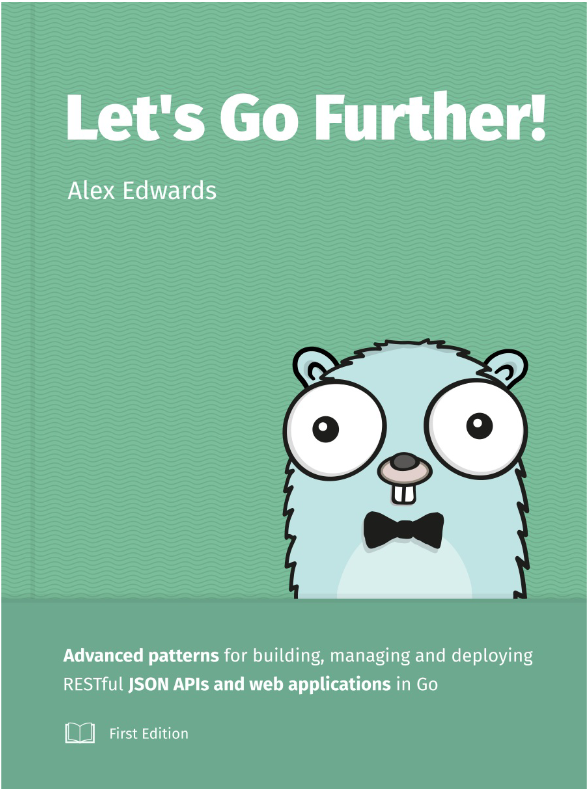
Автор: Edwards Alex
Дата выхода: 2021
Издательство: Independent publishing
Количество страниц: 582
Размер файла: 3,7 МБ
Тип файла: PDF
Добавил: codelibs
Проверить на вирусыContents....2
Introduction....6
Conventions....7
About the author....8
Copyright and disclaimer....8
Prerequisites....9
Background knowledge....9
Go 1.16....9
Other software....9
Getting Started....11
Project Setup and Skeleton Structure....12
Generating the skeleton directory structure....13
Hello world!....14
A Basic HTTP Server....16
Creating the healthcheck handler....17
Demonstration....18
Additional Information....20
API versioning....20
API Endpoints and RESTful Routing....21
Choosing a router....22
Encapsulating the API routes....23
Adding the new handler functions....25
Creating a helper to read ID parameters....28
Additional Information....29
Conflicting routes....29
Customizing httprouter behavior....30
Sending JSON Responses....31
Fixed-Format JSON....33
Additional Information....36
JSON charset....36
JSON Encoding....38
Creating a writeJSON helper method....40
Additional Information....42
How different Go types are encoded....42
Using json.Encoder....43
Performance of json.Encoder and json.Marshal....44
Additional JSON encoding nuances....45
Encoding Structs....46
Changing keys in the JSON object....49
Hiding struct fields in the JSON object....50
Additional Information....52
The string struct tag directive....52
Formatting and Enveloping Responses....54
Relative performance....55
Enveloping responses....56
Additional Information....59
Response structure....59
Advanced JSON Customization....60
Customizing the Runtime field....61
Additional Information....64
Alternative #1 - Customizing the Movie struct....64
Alternative #2 - Embedding an alias....66
Sending Error Messages....68
Routing errors....70
Additional Information....72
System-generated error responses....72
Parsing JSON Requests....74
JSON Decoding....76
Zero values....78
Additional Information....79
Supported destination types....79
Using the json.Unmarshal function....79
Additional JSON decoding nuances....80
Managing Bad Requests....81
Triaging the Decode error....82
Making a bad request helper....85
Additional Information....86
Panicking vs returning errors....86
Restricting Inputs....88
Custom JSON Decoding....92
The json.Unmarshaler interface....92
Validating JSON Input....96
Creating a validator package....96
Performing validation checks....98
Making validation rules reusable....100
Database Setup and Configuration....104
Setting up PostgreSQL....105
Installing PostgreSQL....105
Connecting to the PostgreSQL interactive terminal....105
Creating databases, users, and extensions....107
Connecting as the new user....108
Additional Information....108
Optimizing PostgreSQL settings....108
Connecting to PostgreSQL....110
Establishing a connection pool....110
Decoupling the DSN....113
Additional Information....115
Using the DSN with psql....115
Configuring the Database Connection Pool....116
Configuring the pool....116
The SetMaxOpenConns method....116
The SetMaxIdleConns method....117
The SetConnMaxLifetime method....118
The SetConnMaxIdleTime method....119
Putting it into practice....119
Configuring the connection pool....120
SQL Migrations....123
An Overview of SQL Migrations....124
Installing the migrate tool....124
Working with SQL Migrations....126
Executing the migrations....129
Additional Information....130
Migrating to a specific version....130
Executing down migrations....130
Fixing errors in SQL migrations....131
Remote migration files....132
Running migrations on application startup....132
CRUD Operations....134
Setting up the Movie Model....135
Additional Information....138
Mocking models....138
Creating a New Movie....141
Executing the SQL query....141
Hooking it up to our API handler....143
Creating additional records....145
Additional Information....147
$N notation....147
Executing multiple statements....147
Fetching a Movie....149
Updating the API handler....150
Additional Information....152
Why not use an unsigned integer for the movie ID?....152
Updating a Movie....154
Executing the SQL query....154
Creating the API handler....155
Using the new endpoint....158
Deleting a Movie....160
Adding the new endpoint....161
Advanced CRUD Operations....164
Handling Partial Updates....165
Performing the partial update....166
Demonstration....168
Additional Information....169
Null values in JSON....169
Optimistic Concurrency Control....170
Preventing the data race....171
Implementing optimistic locking....172
Additional Information....176
Round-trip locking....176
Locking on other fields or types....176
Managing SQL Query Timeouts....178
Mimicking a long-running query....178
Adding a query timeout....180
Timeouts outside of PostgreSQL....183
Updating our database model....184
Additional Information....186
Using the request context....186
Filtering, Sorting, and Pagination....188
Parsing Query String Parameters....189
Creating helper functions....190
Adding the API handler and route....191
Creating a Filters struct....193
Validating Query String Parameters....196
Listing Data....199
Updating the application....199
Filtering Lists....204
Dynamic filtering in the SQL query....204
Full-Text Search....209
Adding indexes....211
Additional Information....212
Non-simple configuration and more information....212
Using STRPOS and ILIKE....213
Sorting Lists....215
Implementing sorting....216
Paginating Lists....221
The LIMIT and OFFSET clauses....221
Updating the database model....223
Returning Pagination Metadata....226
Calculating the total records....226
Updating the code....227
Structured Logging and Error Handling....233
Structured JSON Log Entries....234
Creating a custom logger....235
Additional Information....240
Integration with the http.Server error log....241
Third-party logging packages....241
Panic Recovery....243
Additional Information....245
Panic recovery in other goroutines....245
Rate Limiting....247
Global Rate Limiting....248
Enforcing a global rate limit....249
IP-based Rate Limiting....253
Deleting old limiters....254
Additional Information....257
Distributed applications....257
Configuring the Rate Limiters....258
Graceful Shutdown....262
Sending Shutdown Signals....263
Intercepting Shutdown Signals....266
Catching SIGINT and SIGTERM signals....268
Executing the Shutdown....271
User Model Setup and Registration....275
Setting up the Users Database Table....276
Setting up the Users Model....278
Adding Validation Checks....280
Creating the UserModel....282
Registering a User....286
Additional Information....290
Email case-sensitivity....290
User enumeration....291
Sending Emails....293
SMTP Server Setup....294
Setting up Mailtrap....294
Creating Email Templates....298
Sending a Welcome Email....300
Creating an email helper....300
Using embedded file systems....302
Using our mail helper....303
Checking the email in Mailtrap....306
Additional Information....307
Retrying email send attempts....307
Sending Background Emails....309
Recovering panics....311
Using a helper function....312
Graceful Shutdown of Background Tasks....316
An introduction to sync.WaitGroup....316
Fixing our application....317
User Activation....322
Setting up the Tokens Database Table....324
Creating Secure Activation Tokens....326
Creating the TokenModel and Validation Checks....328
Additional Information....330
The math/rand package....330
Sending Activation Tokens....331
Additional Information....336
A standalone endpoint for generating tokens....336
Activating a User....337
Creating the activateUserHandler....337
The UserModel.GetForToken method....340
Additional Information....344
Web application workflow....344
SQL query timing attack....346
Authentication....347
Authentication Options....348
HTTP basic authentication....348
Token authentication....349
Stateful token authentication....350
Stateless token authentication....350
API-key authentication....352
OAuth 2.0 / OpenID Connect....352
What authentication approach should I use?....353
Generating Authentication Tokens....355
Building the endpoint....356
Additional Information....360
The Authorization header....360
Authenticating Requests....362
Creating the anonymous user....362
Reading and writing to the request context....363
Creating the authentication middleware....365
Demonstration....368
Permission-based Authorization....370
Requiring User Activation....371
Demonstration....373
Splitting up the middleware....375
Additional Information....376
In-handler checks....376
Setting up the Permissions Database Table....378
Relationship between permissions and users....378
Creating the SQL migrations....380
Setting up the Permissions Model....382
Checking Permissions....385
Demonstration....387
Granting Permissions....390
Updating the permissions model....390
Updating the registration handler....391
Cross Origin Requests....394
An Overview of CORS....395
Demonstrating the Same-Origin Policy....397
Demonstration....399
Simple CORS Requests....403
Restricting Origins....406
Supporting multiple dynamic origins....406
Additional Information....411
Partial origin matches....411
The null origin....412
Authentication and CORS....412
Preflight CORS Requests....413
Demonstrating a preflight request....413
Responding to preflight requests....418
Updating our middleware....419
Additional Information....421
Caching preflight responses....421
Preflight wildcards....422
Metrics....424
Exposing Metrics with Expvar....425
Creating Custom Metrics....429
Dynamic metrics....431
Additional Information....437
Protecting the metrics endpoint....437
Removing default metrics....437
Request-level Metrics....438
Additional Information....444
Calculating additional metrics....444
Recording HTTP Status Codes....446
Additional Information....450
Visualizing and analyzing metrics....450
Building, Versioning and Quality Control....452
Creating and Using Makefiles....453
A simple makefile....453
Environment variables....454
Passing arguments....455
Namespacing targets....457
Prerequisite targets and asking for confirmation....458
Displaying help information....460
Phony targets....461
Managing Environment Variables....465
Using a .envrc file....466
Quality Controlling Code....468
Additional Information....471
Testing....471
Module Proxies and Vendoring....473
Module proxies....473
Vendoring....475
Vendoring new dependencies....480
Additional Information....483
The ./… pattern....483
Building Binaries....485
Reducing binary size....486
Cross-compilation....487
Additional Information....488
Build caching....488
Managing and Automating Version Numbers....490
Displaying the version number....490
Including the build time....492
Automated version numbering with Git....495
Using Git tags....498
Deployment and Hosting....500
Creating a Digital Ocean Droplet....502
Creating a SSH key....503
Adding the SSH key to Digital Ocean....505
Creating a droplet....507
Server Configuration and Installing Software....515
Connecting as the greenlight user....518
Connecting to the droplet....521
Additional Information....522
Future changes to the droplet configuration....522
Deployment and Executing Migrations....523
Running the API....526
Running the API as a Background Service....529
Restarting after reboot....532
Disable port 4000....533
Additional Information....534
Listening on a restricted port....534
Viewing logs....534
Configuring the SMTP provider....535
Additional unit file options....535
Using Caddy as a Reverse Proxy....536
Blocking access to application metrics....538
Using a domain name....541
Enabling HTTPS....543
Appendices....546
Managing Password Resets....547
Additional Information....553
Web application workflow....553
Creating Additional Activation Tokens....554
Authentication with JSON Web Tokens....559
JSON Encoding Nuances....568
Nil and empty slices are encoded differently....568
Using omitempty on a zero-valued struct doesn’t work....568
Using omitempty on a zero-value time.Time doesn’t work....569
Non-ASCII punctuation characters aren’t supported in struct tags....569
Integer, time.Time and net.IP values can be used as map keys....570
Angle brackets and ampersands in strings are escaped....570
Trailing zeroes are removed from floats....571
Working with pre-computed JSON....571
The MarshalText fallback....572
The receiver matters when using MarshalJSON....573
JSON Decoding Nuances....574
Decoding into Go arrays....574
Partial JSON decoding....574
Decoding into interface{} types....575
Decoding a JSON number to an interface{}....576
Struct tag directives....578
Request Context Timeouts....579
This book is written as a follow up to Let’s Go, and we’ll leverage a lot of the information and code patterns from that book again here.
If you’ve already read and enjoyed Let’s Go, then this book should be a good fit for you and the ideal next step in your learning. If you haven’t, then I highly recommend starting with Let’s Go first — especially if you’re a newcomer to Go.
You can read this as a standalone book, but please be aware that it is somewhat advanced — it doesn’t explain the fundamentals in detail, and some topics (like testing) don’t feature at all because they were covered heavily in the previous book. But if you’re comfortable using Go and already have a decent amount of experience behind you, then this book may also be a good fit for you. Feel free to jump straight in.


